LeakProqs
Experience Ultimate Leak Detection Precision With LeakProqs Freon Leak Detector
Looking For High-Precision Sensor With Triple-Alert System?
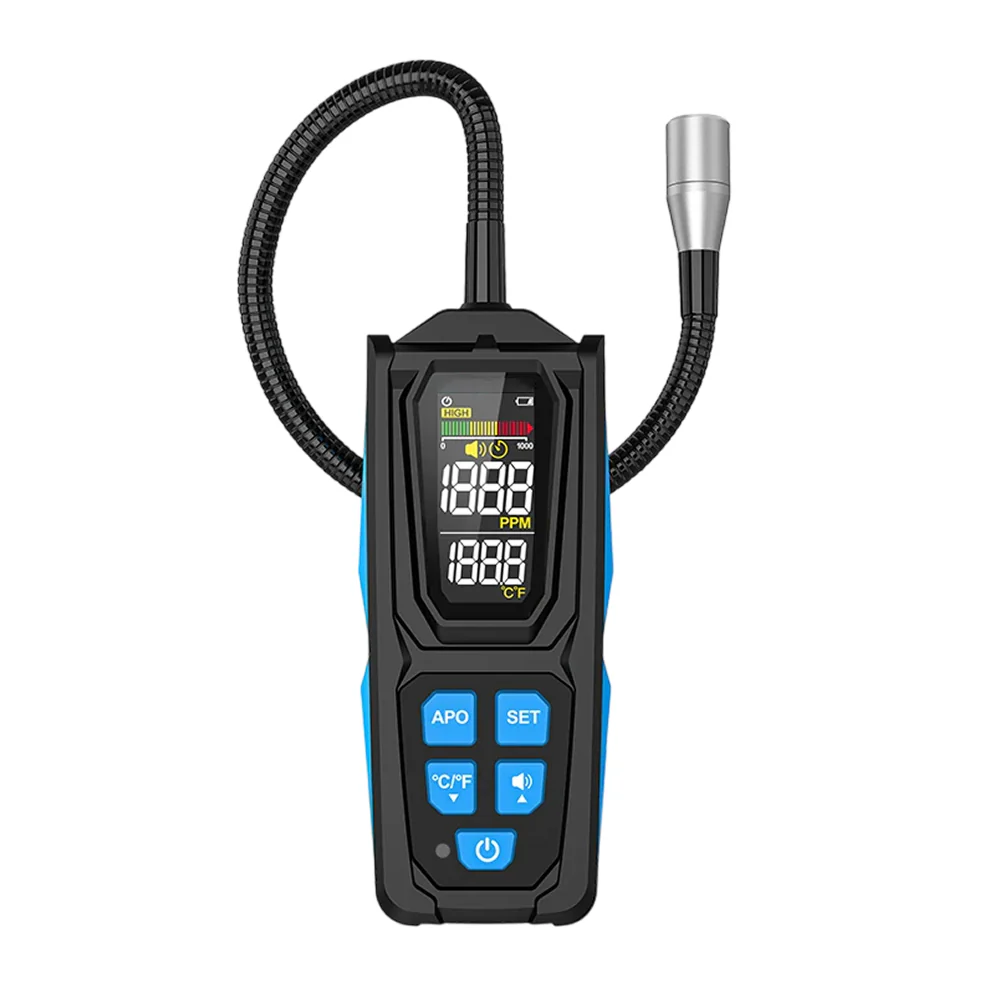
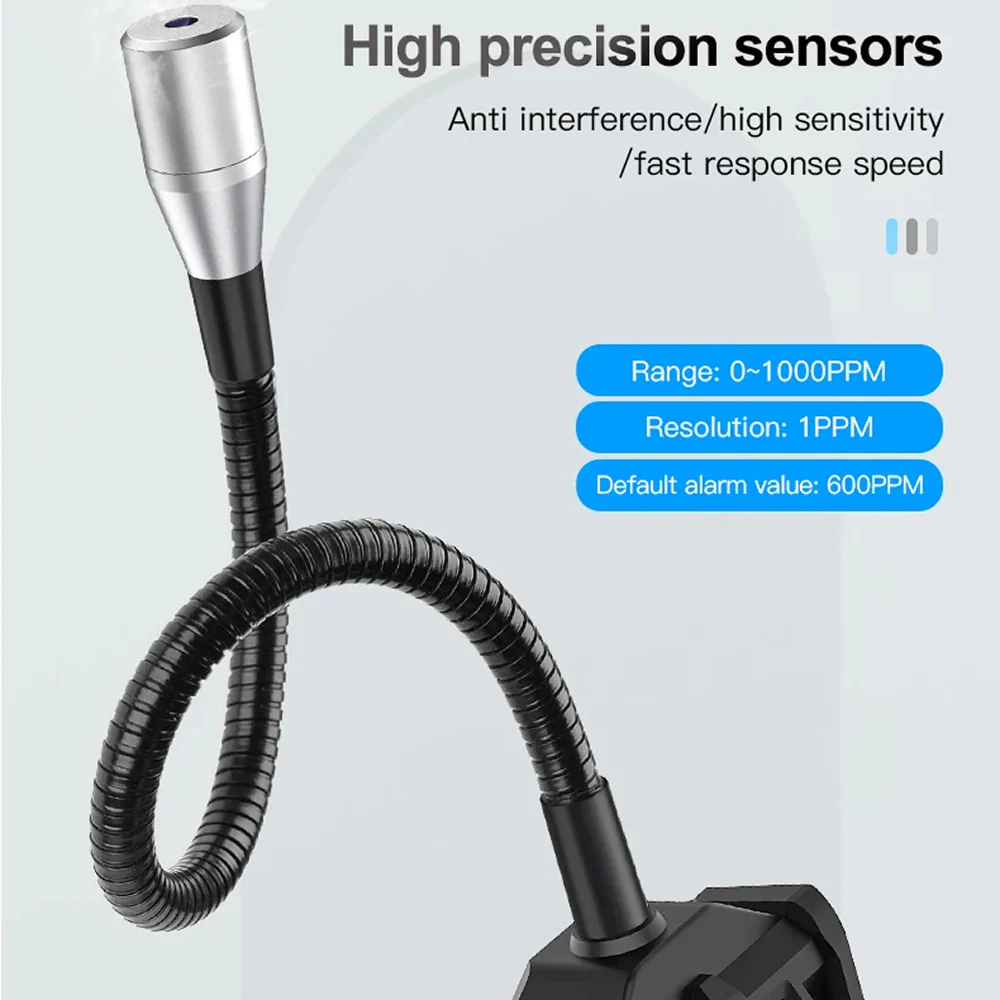
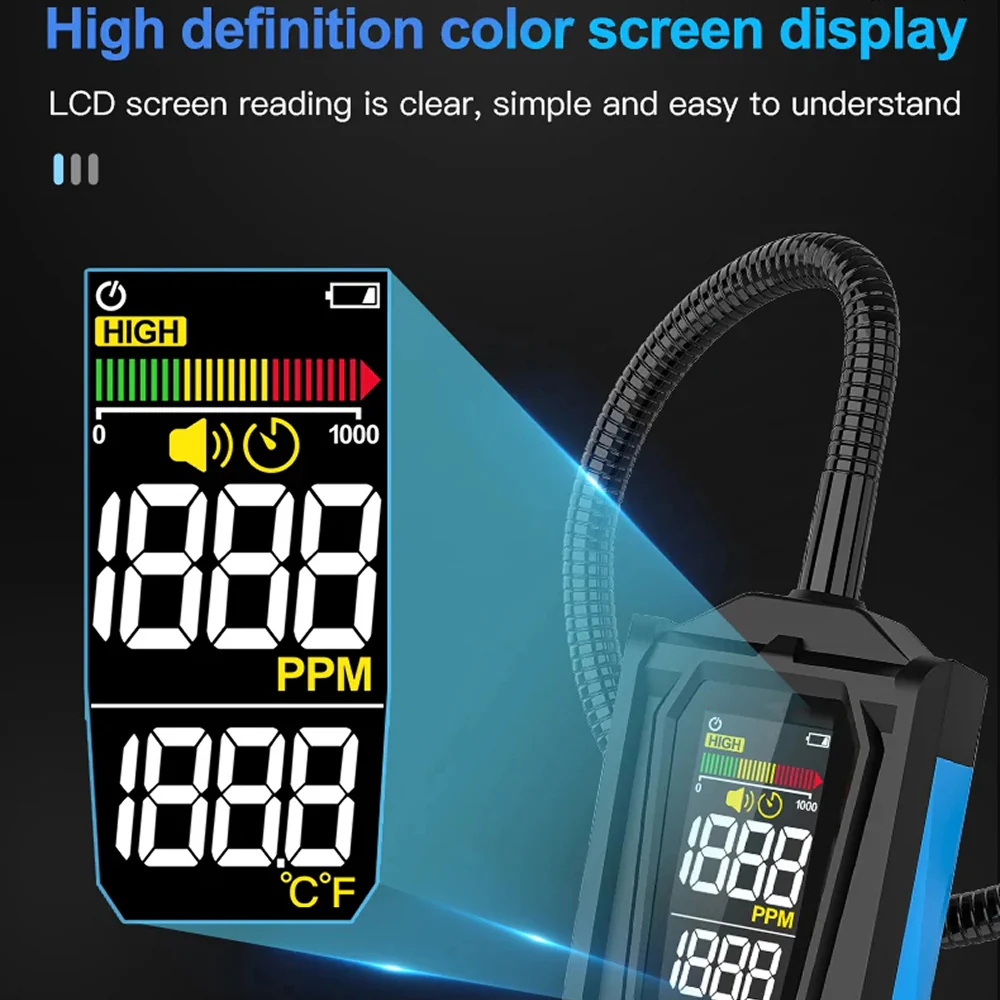
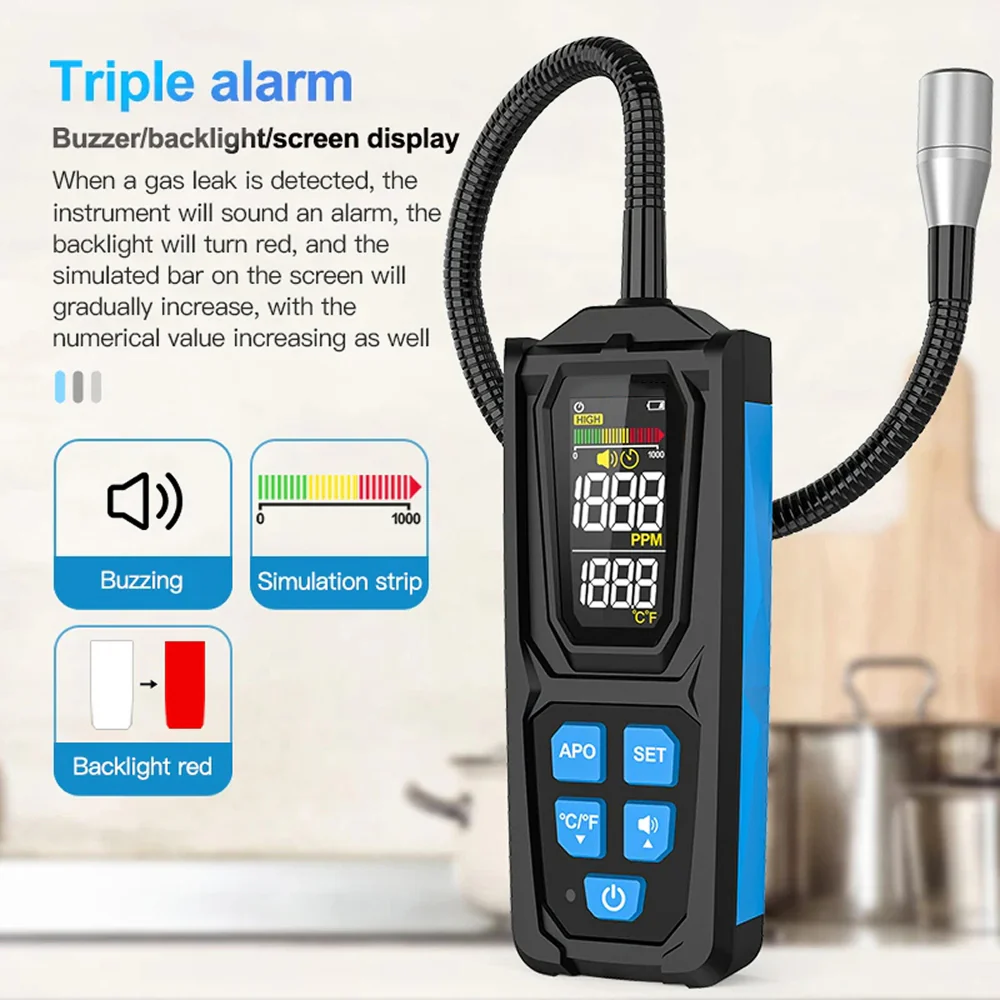
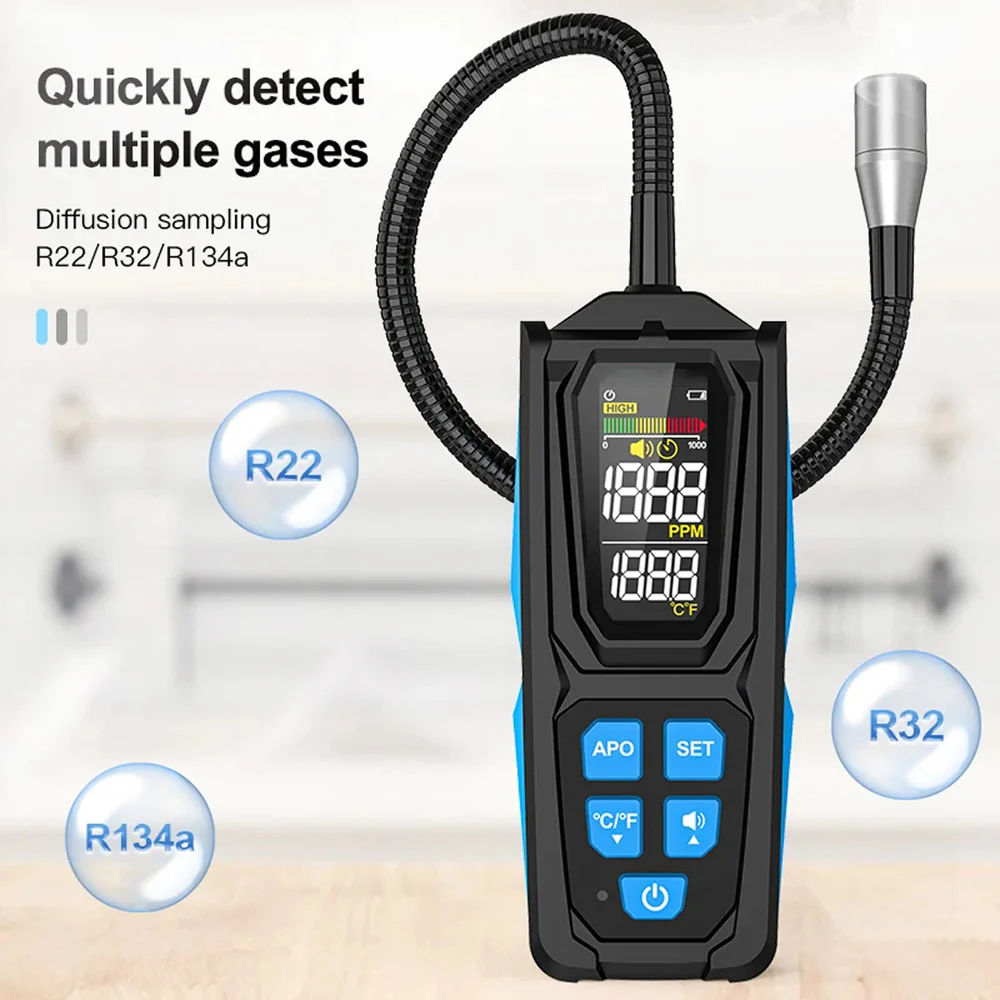
LeakProqs Freon Leak Detector features advanced anti-interference sensor measuring refrigerant leaks 0-1000 ppm with 1 ppm resolution—detects R22, R32, R134a, and all air conditioner gases accurately—while triple-alert leak detection provides multi-sensory warnings: audible buzzer sounds, screen backlight turns red, and rising bar graph with real-time PPM values ensures immediate leak identification preventing refrigerant loss, environmental damage, and system inefficiency.
Wanting Universal Flexible Hose With Practical Features?
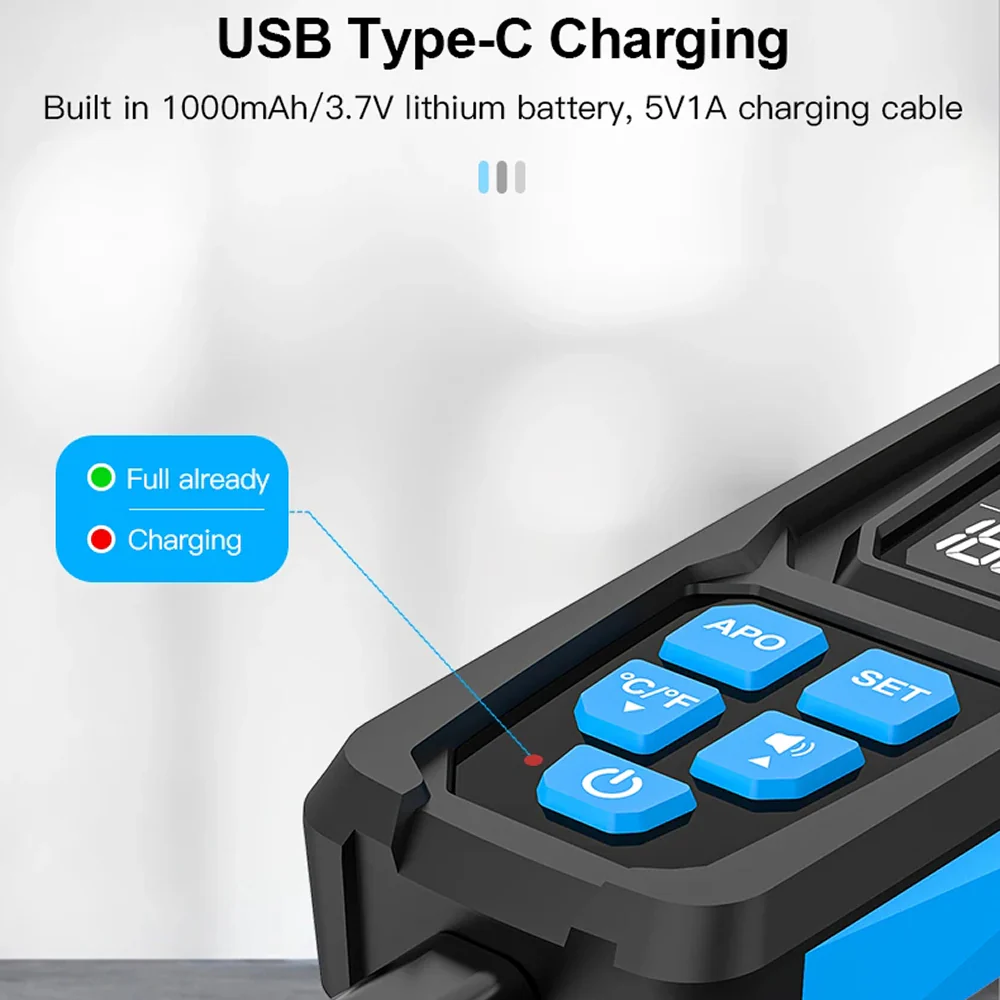
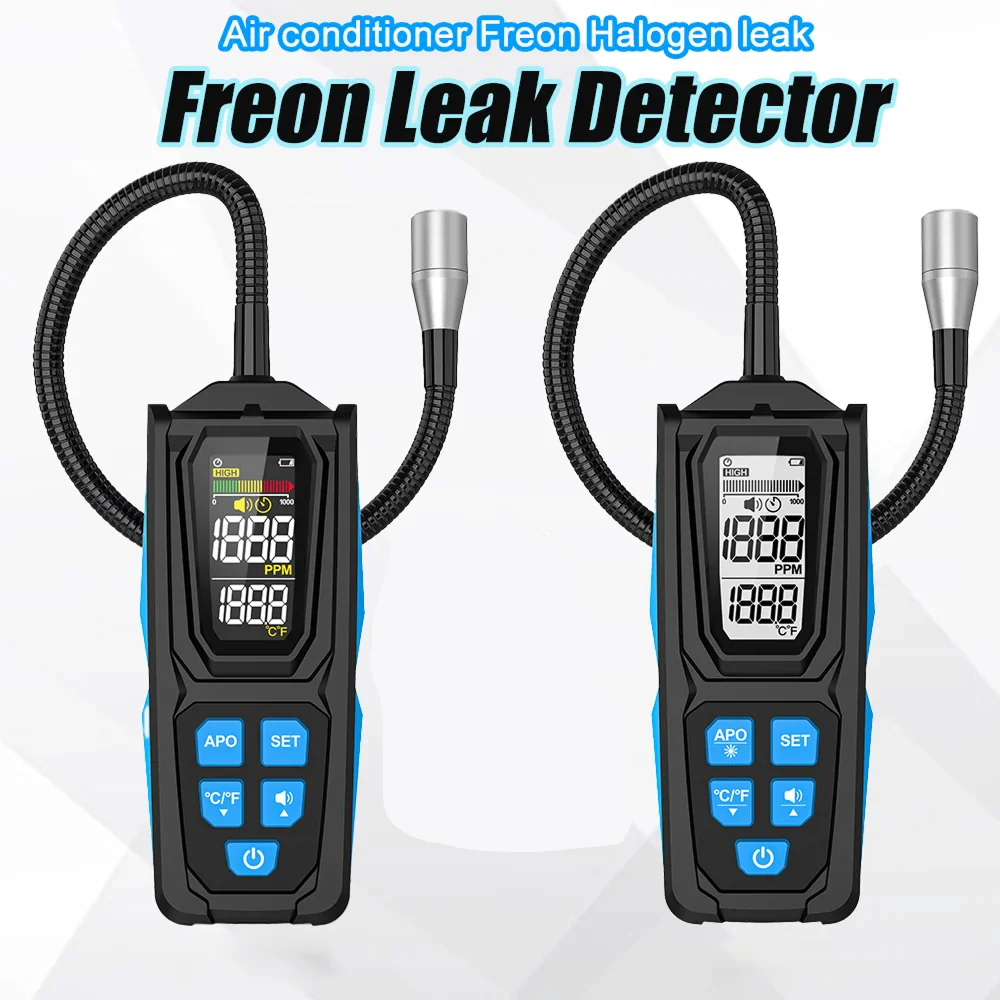
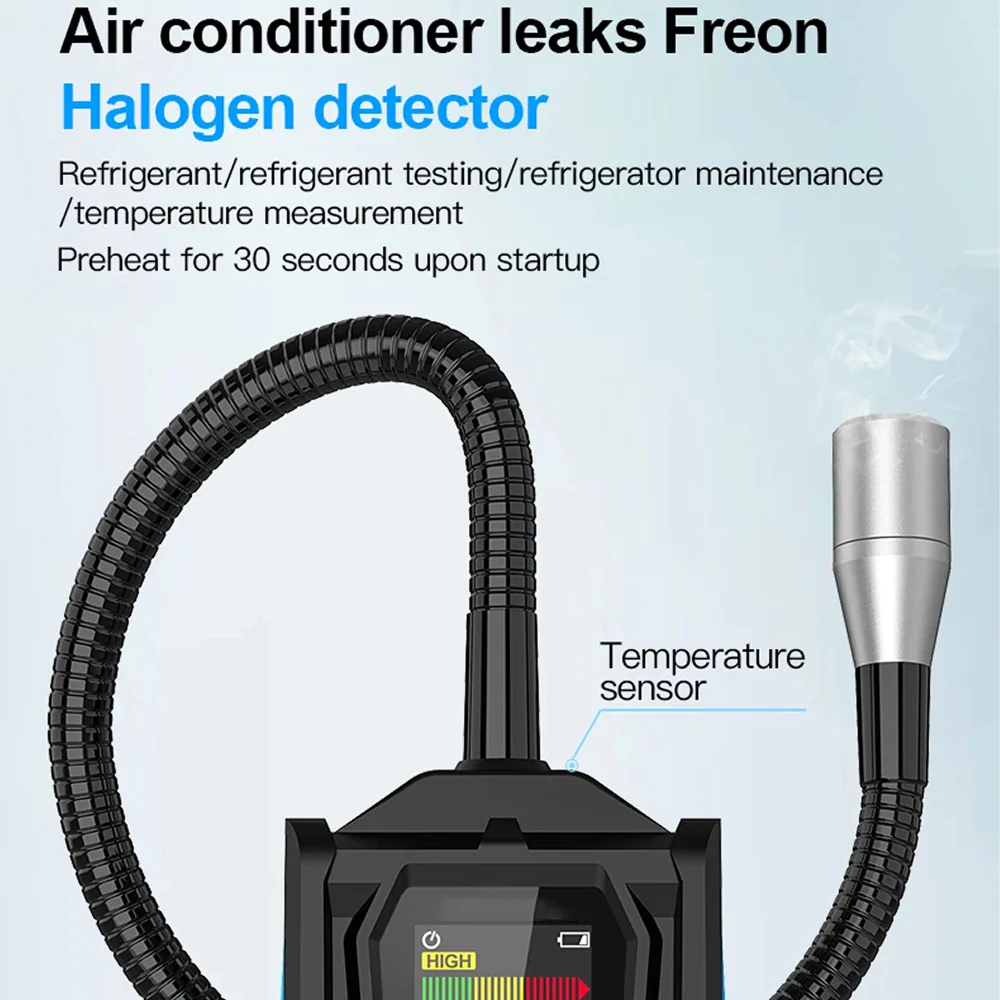
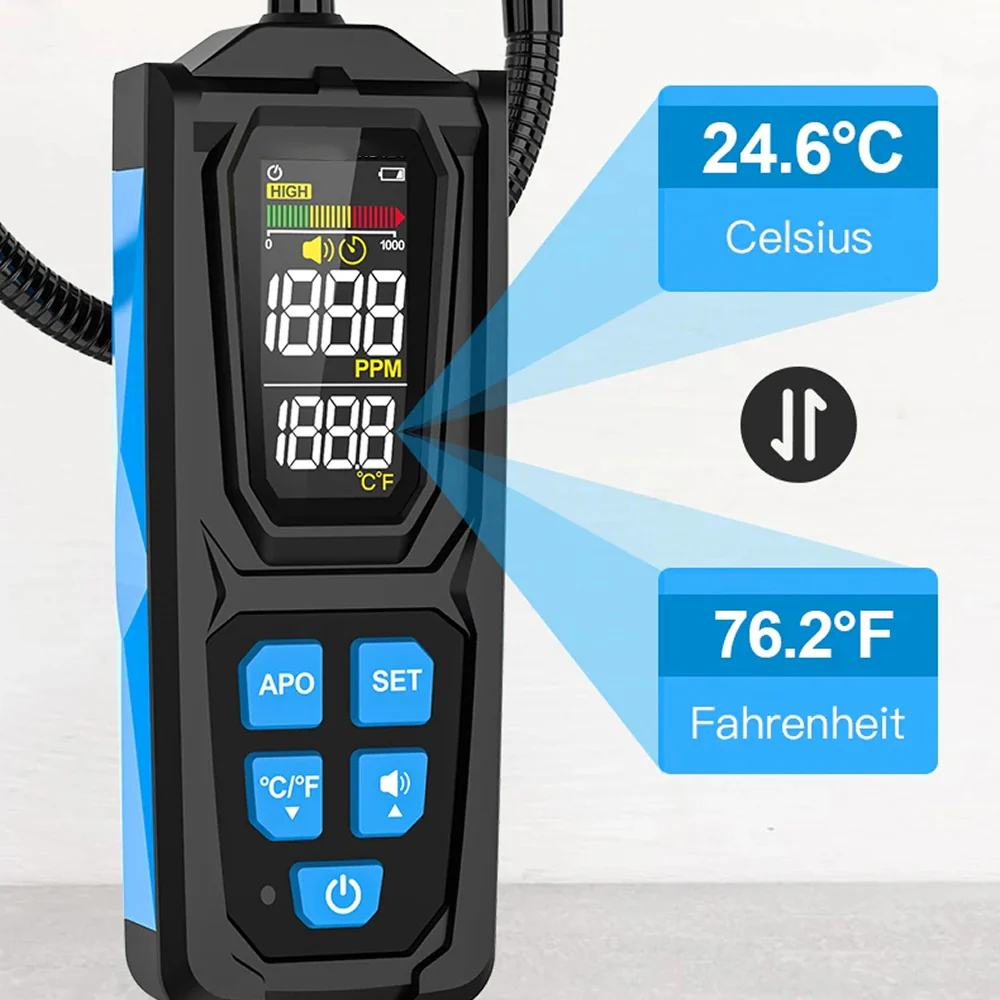
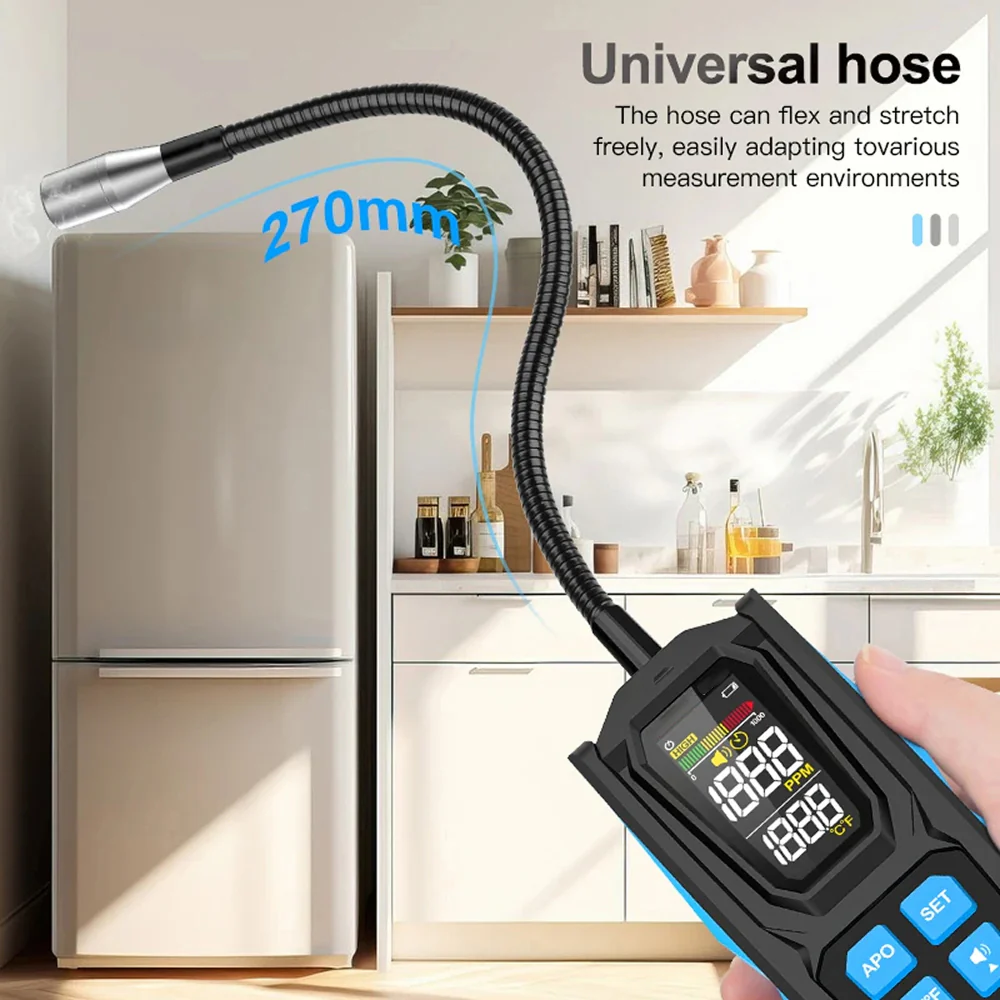
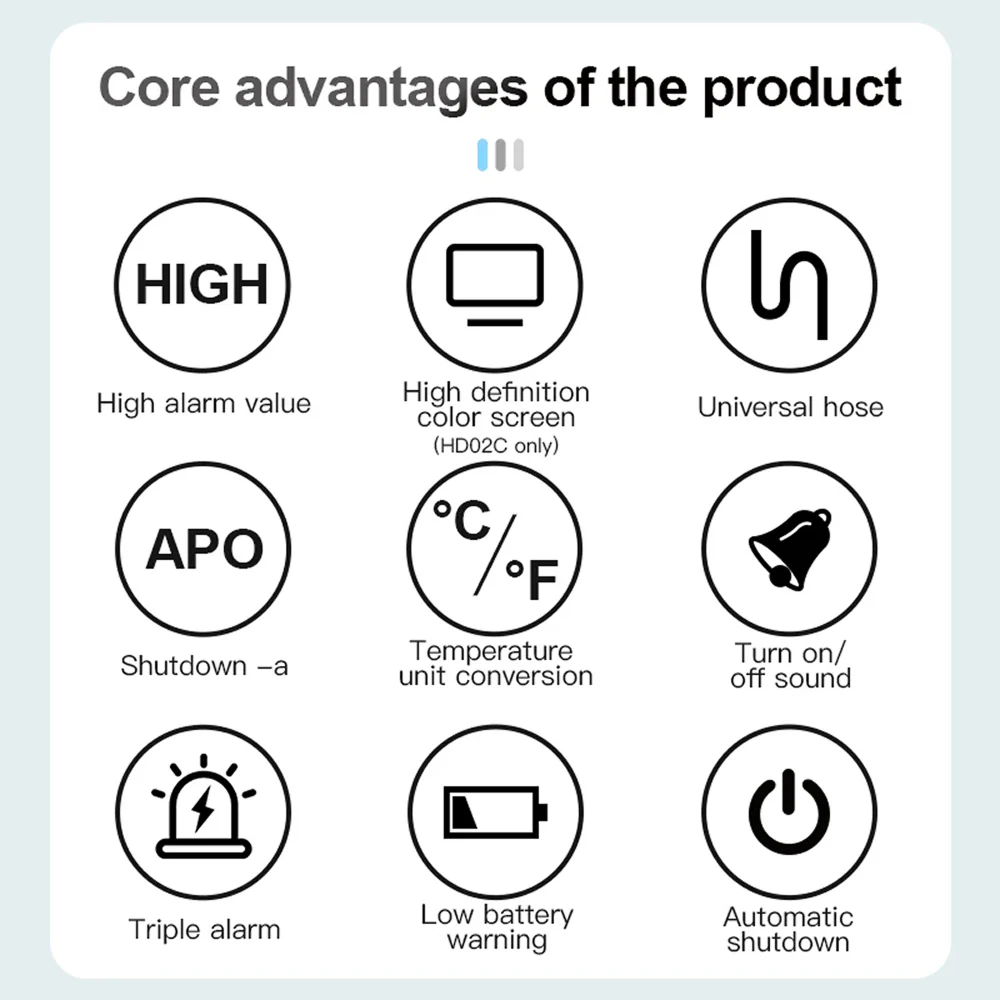
LeakProqs Freon Leak Detector equipped 270mm universal hose bending and extending easily accessing confined or complex spaces in HVAC and refrigeration systems—reaches tight areas behind equipment, inside ducts, or around connections impossible standard rigid probes—while practical user features include clear color screen (HD02C model), Celsius/Fahrenheit temperature display, adjustable alarm value customizing sensitivity, sound on/off toggle, and 10-minute auto power-off conserving battery. HD02C: color screen with lithium battery supporting USB charge. HD02: normal screen using 1.5V AAA batteries (not included).
Transform Refrigerant Leak Detection With Professional Sensor Technology
This Freon leak detector combines high-precision 0-1000 ppm sensor (1 ppm resolution), triple-alert system (buzzer/red backlight/bar graph), and universal 270mm flexible hose with color screen display, ambient temperature measurement, adjustable alarm value, sound toggle, auto power-off, USB rechargeable battery (HD02C), R22/R32/R134a compatibility, and multi-sensory warnings for complete refrigerant leak detection solution HVAC technicians and refrigeration professionals.
High-Precision 0-1000 PPM Sensor
Triple-Alert Buzzer/Backlight/Graph
270mm Universal Flexible Hose
Color Screen USB Rechargeable
HIGH-PRECISION REFRIGERANT DETECTION
Advanced anti-interference sensor measures refrigerant concentrations 0-1000 ppm with 1 ppm resolution—detects minute leaks invisible other methods preventing refrigerant loss (€50-200+ per pound refrigerant), environmental damage (CFCs/HCFCs ozone depletion, HFCs global warming), and system inefficiency (low refrigerant reduces cooling capacity increasing energy costs). Universal compatibility: R22 (common older systems being phased out), R32 (newer eco-friendly refrigerant), R134a (automotive AC, commercial refrigeration), and all halogen-based refrigerants. Sensitivity crucial—small leaks (5-10 ppm) undetectable without precision instrumentation accumulate significant refrigerant loss over weeks/months requiring expensive recharging and contributing environmental harm versus immediate detection enabling timely repair.
TRIPLE-ALERT MULTI-SENSORY WARNING
Redundant notification ensures leak detection regardless environment: audible buzzer—escalating beep frequency as concentration increases (slow beeps low concentration, rapid beeps high concentration) alerts even when not watching screen, red backlight—visual warning obvious peripheral vision working confined spaces where screen not directly visible, and bar graph with real-time PPM values—quantifies leak severity enabling assessment (minor seepage versus major breach) informing repair urgency decisions. Multi-sensory advantage: noisy environments where buzzer inaudible (compressor rooms, mechanical spaces), bright sunlight washing out screen visibility (rooftop units), or gloved hands making muting difficult—multiple alerts ensure awareness regardless conditions. Adjustable alarm threshold: set sensitivity trigger level (default typically 10-50 ppm) customizing false positive reduction (ambient contamination) versus maximum sensitivity detecting smallest leaks.
UNIVERSAL 270MM FLEXIBLE HOSE
Extended reach accesses challenging locations: 270mm (10.6 inches) length with flexible gooseneck design bends around obstacles, behind equipment, inside ducts, or around pipe connections impossible rigid probes, concentrated sampling—hose tip positions sensor exactly suspected leak location (valve stems, flare fittings, brazed joints, compressor seals) versus waving detector generally hoping proximity sufficient. Applications: behind wall-mounted units accessing rear connections, inside air handler cabinets checking evaporator coils, around outdoor condenser units inspecting service valves, and automotive AC systems reaching firewall connections or evaporator cores dashboard. Probe protection: hose shields delicate sensor from physical damage (impacts, crushing) extending detector lifespan versus exposed sensors vulnerable breakage during field use.
PRACTICAL USER INTERFACE
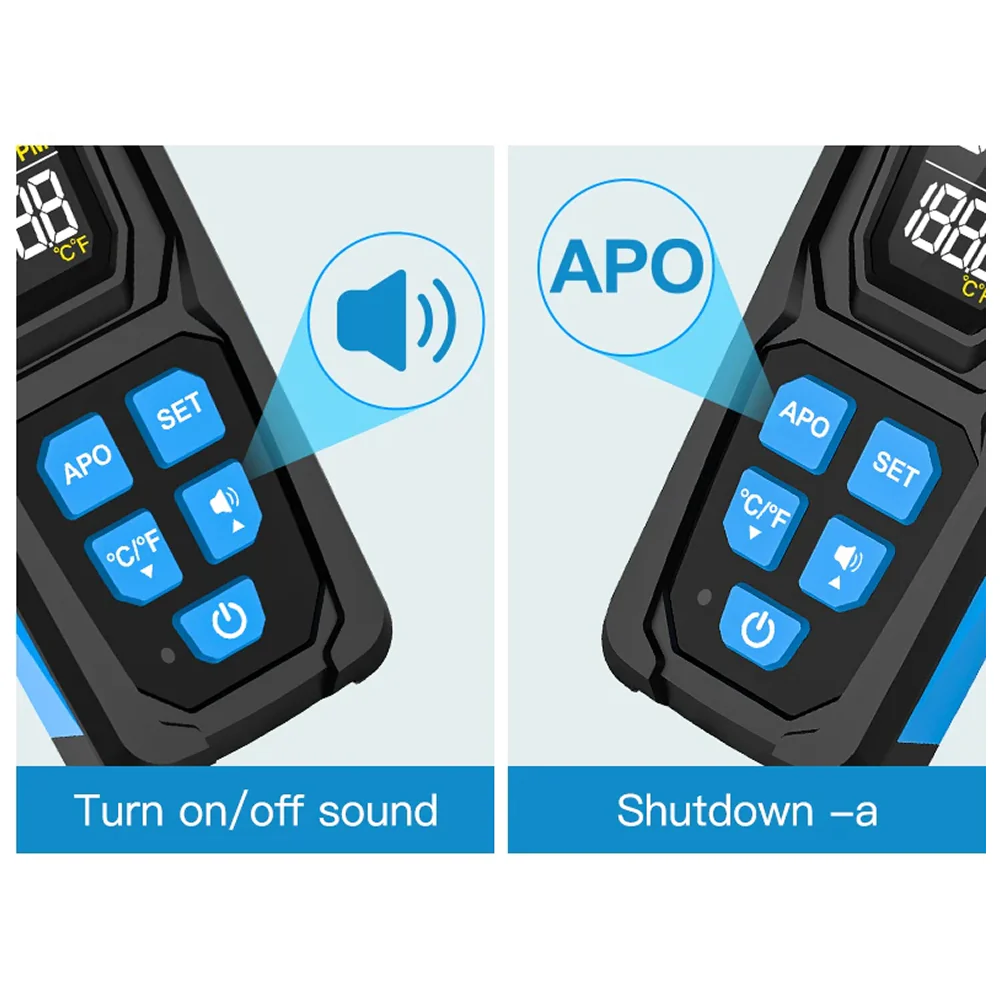
Convenient features enhance field usability: color screen (HD02C)—improved visibility versus monochrome displays particularly bright sunlight or dim mechanical rooms, temperature display Celsius/Fahrenheit—ambient temperature measurement useful HVAC diagnostics beyond leak detection (verifying discharge air temperatures, checking superheat/subcool calculations), and adjustable alarm—customize threshold sensitivity environment (raise threshold reducing false alarms contaminated areas, lower detecting minute leaks critical applications). Sound toggle: mute buzzer maintaining visual-only alerts (residential service avoiding disturbing occupants, quiet environments like hospitals), auto power-off 10 minutes—conserves battery if accidentally left on after completing job (common oversight busy technicians), and USB rechargeable (HD02C)—eliminates disposable battery expense and availability concerns versus HD02 AAA batteries offering field-replaceable power option.
PRECISION LEAK DETECTION
Advanced anti-interference sensor measures 0-1000 ppm with 1 ppm resolution detecting R22, R32, R134a, and all halogen refrigerants—identifies minute leaks preventing refrigerant loss (€50-200+ per pound), environmental damage (ozone depletion, global warming), and system inefficiency (low refrigerant reduces cooling capacity increasing energy costs) through early detection enabling timely repair before minor seepage becomes expensive major breach requiring complete system recharge.
MULTI-SENSORY TRIPLE ALERT
Redundant warning system ensures leak awareness regardless environment—audible buzzer with escalating beep frequency alerts even when not watching screen, red backlight provides visual warning obvious peripheral vision working confined spaces, bar graph with real-time PPM values quantifies leak severity enabling assessment informing repair urgency decisions, adjustable alarm threshold customizes sensitivity reducing false positives contaminated areas while maintaining maximum detection capability critical applications.
Meet The LEAKPROQS
Frequently Asked Questions
Does this actually detect small leaks or only major refrigerant releases?
High sensitivity detects minor leaks: 1 ppm resolution—identifies leaks releasing grams annually versus pounds monthly (small leaks compound over time becoming expensive and environmentally damaging), typical leak rates: minor seepage 5-20 ppm detectable, moderate leaks 50-200 ppm obvious, major breaches 500-1000 ppm saturating sensor. Limitations: ultra-trace leaks (<5 ppm) may require longer sampling time or multiple passes confirming versus single sweep, ambient contamination (previous refrigerant spills, residual gases) creates false positives necessitating judgment distinguishing active leaks from background, and ventilation—outdoor units or well-ventilated spaces disperse refrigerant quickly making detection harder versus confined spaces concentrating gases. Comparison methods: electronic detectors (this type) most sensitive, soap bubbles only show leaks if visible accessible (miss internal leaks), dye injection requires UV light and time (dye must circulate and leak externally).
Will this work on my specific refrigerant type or just common ones?
Halogen-based refrigerant universal detection: Compatible refrigerants—R22 (HCFC phasing out), R32 (HFC increasingly common residential), R134a (HFC automotive/commercial), R410A (HFC blend residential/commercial), R404A, R407C, R290 (propane—hydrocarbons detectable), and any chlorine or fluorine-containing refrigerant. Non-compatible—pure hydrocarbons without halogens (propane, isobutane in some applications) undetectable, ammonia (NH3 industrial refrigeration) requires different sensor technology, CO2 (R744 transcritical systems) needs specialized detector. Verify refrigerant: check system nameplate identifying refrigerant type—if halogen-based (most common AC/refrigeration) detector works, if specialty gas consult specifications confirming compatibility before purchasing.
How long does battery actually last between charges or replacements?
Runtime depends model and usage: HD02C (lithium rechargeable)—4-6 hours continuous use per charge, recharge time 2-3 hours via USB (can use power bank field extending runtime), battery lifespan 300-500 charge cycles (1-3 years typical professional use) before capacity degrades significantly. HD02 (AAA batteries)—6-10 hours continuous use per set (quality alkaline), battery cost €2-5 per set, consider rechargeable AAA (higher upfront, lower long-term cost). Auto power-off benefit: 10-minute shutoff prevents battery drain if forgetting power off between service calls—typical technician uses 15-30 minutes per job intermittently so single charge/battery set lasts multiple days normal use.
Can I damage AC system using this detector incorrectly?
No damage risk—completely passive device: Detection method—sensor samples air detecting refrigerant presence (doesn't inject, extract, or interact with system mechanically/electrically), non-invasive—hose tip merely positions near suspected leak areas without penetrating or contacting refrigerant circuit. Safe practices: avoid contaminating sensor (oil, solvents, other gases degrade sensitivity requiring recalibration), don't use ignition sources near detected leaks (some refrigerants decompose to toxic gases when heated—welding, torch brazing near active leaks dangerous), and proper leak repair—detecting leak is first step, qualified technician should evacuate system, repair, vacuum, recharge per EPA regulations (DIY refrigerant work often illegal depending jurisdiction and refrigerant type).
Does this replace professional HVAC technician or just help identify problems?
Diagnostic tool not substitute for professional repair: What detector does—locates refrigerant leaks precisely enabling targeted repair versus guessing or shotgun parts replacement, verifies leak repair success (confirm no residual leaks after fix), and monitors system health over time detecting developing problems early. What detector doesn't—repair leaks (requires recovery equipment, vacuum pump, manifold gauges, torch/crimpers, EPA certification depending on refrigerant), diagnose non-leak problems (compressor failure, electrical issues, airflow restrictions), or legally handle refrigerants (US requires EPA 608 certification, EU F-Gas certification—regulations vary by region). Optimal use: homeowner detecting leaks before calling technician (inform them specific location saving diagnostic time/cost), DIY enthusiast identifying problems on personal equipment, or HVAC professional field tool locating elusive leaks quickly.
How accurate is PPM reading or just approximate?
Reasonably accurate with limitations: Calibration—factory calibrated to specific refrigerant (usually R134a) with ±10-20% accuracy typical consumer detectors (professional units ±5% cost €500-2000+), cross-sensitivity—detector responds to halogens generally so different refrigerants may display slightly different PPM values for same actual concentration (useful identifying leak presence, less precise quantifying exact amount). Environmental factors: temperature affects sensor response (extreme cold/heat reduces accuracy), humidity high levels may interfere readings, and wind/ventilation disperses refrigerant making readings lower than actual leak rate (indoor confined spaces more accurate than outdoor windy conditions). Practical application: absolute PPM number less important than relative change—readings increasing as approaching leak source guides pinpointing, readings dropping when moving away confirms location, and consistency post-repair (zero or near-zero PPM) verifies successful fix.
Can this detect leaks through walls or only accessible locations?
Limited to accessible air sampling: Detection requirement—sensor must contact refrigerant-contaminated air so leaks behind sealed walls, inside inaccessible cavities, or deeply buried only detectable if refrigerant migrates to accessible location (seeping through gaps, vents, or porous materials). Accessible leaks: service valves, flare fittings, brazed joints, compressor seals, condenser/evaporator coils, expansion valve connections—anywhere hose can reach and refrigerant escapes into sampable air. Inaccessible leaks: inside walls between studs (unless refrigerant finds exit path), under concrete slabs, inside hermetically sealed components—require different methods (pressurizing with nitrogen observing pressure drop, dye injection waiting for external evidence, thermal imaging detecting temperature anomalies). Technique: work systematically checking all accessible connections/components first before assuming inaccessible leak—80%+ leaks are serviceable locations if searched methodically.
Does high sensitivity mean more false alarms or actually useful?
Sensitivity double-edged sword: Advantages—detects minute leaks early (5-10 ppm seepage caught before becoming 100+ ppm costly leak), finds slow leaks others miss (refrigerant loss noticed seasonally but leak site unknown—high sensitivity locates source). Disadvantages—false positives from: ambient contamination (previous spills, residual refrigerant in area), cross-contamination (other halogenated substances—cleaners, solvents triggering sensor), and operator error (moving too quickly not allowing sensor stabilize, confusing background for leak). Mitigation: adjustable threshold (raise to 20-50 ppm reducing false alarms if working contaminated environment), patience (pause suspected leak area 5-10 seconds confirming consistent reading versus transient spike), and ventilation (disperse background gases isolating active leak signature). Professional technique: scan slowly methodically rather than waving rapidly hoping detector finds leak itself—deliberate approach distinguishes true leaks from noise.

Description
Experience Ultimate Leak Detection Precision With LeakProqs Freon Leak Detector
Looking For High-Precision Sensor With Triple-Alert System?
LeakProqs Freon Leak Detector features advanced anti-interference sensor measuring refrigerant leaks 0-1000 ppm with 1 ppm resolution—detects R22, R32, R134a, and all air conditioner gases accurately—while triple-alert leak detection provides multi-sensory warnings: audible buzzer sounds, screen backlight turns red, and rising bar graph with real-time PPM values ensures immediate leak identification preventing refrigerant loss, environmental damage, and system inefficiency.
Wanting Universal Flexible Hose With Practical Features?
LeakProqs Freon Leak Detector equipped 270mm universal hose bending and extending easily accessing confined or complex spaces in HVAC and refrigeration systems—reaches tight areas behind equipment, inside ducts, or around connections impossible standard rigid probes—while practical user features include clear color screen (HD02C model), Celsius/Fahrenheit temperature display, adjustable alarm value customizing sensitivity, sound on/off toggle, and 10-minute auto power-off conserving battery. HD02C: color screen with lithium battery supporting USB charge. HD02: normal screen using 1.5V AAA batteries (not included).
Transform Refrigerant Leak Detection With Professional Sensor Technology
This Freon leak detector combines high-precision 0-1000 ppm sensor (1 ppm resolution), triple-alert system (buzzer/red backlight/bar graph), and universal 270mm flexible hose with color screen display, ambient temperature measurement, adjustable alarm value, sound toggle, auto power-off, USB rechargeable battery (HD02C), R22/R32/R134a compatibility, and multi-sensory warnings for complete refrigerant leak detection solution HVAC technicians and refrigeration professionals.
High-Precision 0-1000 PPM Sensor
Triple-Alert Buzzer/Backlight/Graph
270mm Universal Flexible Hose
Color Screen USB Rechargeable
HIGH-PRECISION REFRIGERANT DETECTION
Advanced anti-interference sensor measures refrigerant concentrations 0-1000 ppm with 1 ppm resolution—detects minute leaks invisible other methods preventing refrigerant loss (€50-200+ per pound refrigerant), environmental damage (CFCs/HCFCs ozone depletion, HFCs global warming), and system inefficiency (low refrigerant reduces cooling capacity increasing energy costs). Universal compatibility: R22 (common older systems being phased out), R32 (newer eco-friendly refrigerant), R134a (automotive AC, commercial refrigeration), and all halogen-based refrigerants. Sensitivity crucial—small leaks (5-10 ppm) undetectable without precision instrumentation accumulate significant refrigerant loss over weeks/months requiring expensive recharging and contributing environmental harm versus immediate detection enabling timely repair.
TRIPLE-ALERT MULTI-SENSORY WARNING
Redundant notification ensures leak detection regardless environment: audible buzzer—escalating beep frequency as concentration increases (slow beeps low concentration, rapid beeps high concentration) alerts even when not watching screen, red backlight—visual warning obvious peripheral vision working confined spaces where screen not directly visible, and bar graph with real-time PPM values—quantifies leak severity enabling assessment (minor seepage versus major breach) informing repair urgency decisions. Multi-sensory advantage: noisy environments where buzzer inaudible (compressor rooms, mechanical spaces), bright sunlight washing out screen visibility (rooftop units), or gloved hands making muting difficult—multiple alerts ensure awareness regardless conditions. Adjustable alarm threshold: set sensitivity trigger level (default typically 10-50 ppm) customizing false positive reduction (ambient contamination) versus maximum sensitivity detecting smallest leaks.
UNIVERSAL 270MM FLEXIBLE HOSE
Extended reach accesses challenging locations: 270mm (10.6 inches) length with flexible gooseneck design bends around obstacles, behind equipment, inside ducts, or around pipe connections impossible rigid probes, concentrated sampling—hose tip positions sensor exactly suspected leak location (valve stems, flare fittings, brazed joints, compressor seals) versus waving detector generally hoping proximity sufficient. Applications: behind wall-mounted units accessing rear connections, inside air handler cabinets checking evaporator coils, around outdoor condenser units inspecting service valves, and automotive AC systems reaching firewall connections or evaporator cores dashboard. Probe protection: hose shields delicate sensor from physical damage (impacts, crushing) extending detector lifespan versus exposed sensors vulnerable breakage during field use.
PRACTICAL USER INTERFACE
Convenient features enhance field usability: color screen (HD02C)—improved visibility versus monochrome displays particularly bright sunlight or dim mechanical rooms, temperature display Celsius/Fahrenheit—ambient temperature measurement useful HVAC diagnostics beyond leak detection (verifying discharge air temperatures, checking superheat/subcool calculations), and adjustable alarm—customize threshold sensitivity environment (raise threshold reducing false alarms contaminated areas, lower detecting minute leaks critical applications). Sound toggle: mute buzzer maintaining visual-only alerts (residential service avoiding disturbing occupants, quiet environments like hospitals), auto power-off 10 minutes—conserves battery if accidentally left on after completing job (common oversight busy technicians), and USB rechargeable (HD02C)—eliminates disposable battery expense and availability concerns versus HD02 AAA batteries offering field-replaceable power option.
PRECISION LEAK DETECTION
Advanced anti-interference sensor measures 0-1000 ppm with 1 ppm resolution detecting R22, R32, R134a, and all halogen refrigerants—identifies minute leaks preventing refrigerant loss (€50-200+ per pound), environmental damage (ozone depletion, global warming), and system inefficiency (low refrigerant reduces cooling capacity increasing energy costs) through early detection enabling timely repair before minor seepage becomes expensive major breach requiring complete system recharge.
MULTI-SENSORY TRIPLE ALERT
Redundant warning system ensures leak awareness regardless environment—audible buzzer with escalating beep frequency alerts even when not watching screen, red backlight provides visual warning obvious peripheral vision working confined spaces, bar graph with real-time PPM values quantifies leak severity enabling assessment informing repair urgency decisions, adjustable alarm threshold customizes sensitivity reducing false positives contaminated areas while maintaining maximum detection capability critical applications.
Meet The LEAKPROQS
Frequently Asked Questions
Does this actually detect small leaks or only major refrigerant releases?
High sensitivity detects minor leaks: 1 ppm resolution—identifies leaks releasing grams annually versus pounds monthly (small leaks compound over time becoming expensive and environmentally damaging), typical leak rates: minor seepage 5-20 ppm detectable, moderate leaks 50-200 ppm obvious, major breaches 500-1000 ppm saturating sensor. Limitations: ultra-trace leaks (<5 ppm) may require longer sampling time or multiple passes confirming versus single sweep, ambient contamination (previous refrigerant spills, residual gases) creates false positives necessitating judgment distinguishing active leaks from background, and ventilation—outdoor units or well-ventilated spaces disperse refrigerant quickly making detection harder versus confined spaces concentrating gases. Comparison methods: electronic detectors (this type) most sensitive, soap bubbles only show leaks if visible accessible (miss internal leaks), dye injection requires UV light and time (dye must circulate and leak externally).
Will this work on my specific refrigerant type or just common ones?
Halogen-based refrigerant universal detection: Compatible refrigerants—R22 (HCFC phasing out), R32 (HFC increasingly common residential), R134a (HFC automotive/commercial), R410A (HFC blend residential/commercial), R404A, R407C, R290 (propane—hydrocarbons detectable), and any chlorine or fluorine-containing refrigerant. Non-compatible—pure hydrocarbons without halogens (propane, isobutane in some applications) undetectable, ammonia (NH3 industrial refrigeration) requires different sensor technology, CO2 (R744 transcritical systems) needs specialized detector. Verify refrigerant: check system nameplate identifying refrigerant type—if halogen-based (most common AC/refrigeration) detector works, if specialty gas consult specifications confirming compatibility before purchasing.
How long does battery actually last between charges or replacements?
Runtime depends model and usage: HD02C (lithium rechargeable)—4-6 hours continuous use per charge, recharge time 2-3 hours via USB (can use power bank field extending runtime), battery lifespan 300-500 charge cycles (1-3 years typical professional use) before capacity degrades significantly. HD02 (AAA batteries)—6-10 hours continuous use per set (quality alkaline), battery cost €2-5 per set, consider rechargeable AAA (higher upfront, lower long-term cost). Auto power-off benefit: 10-minute shutoff prevents battery drain if forgetting power off between service calls—typical technician uses 15-30 minutes per job intermittently so single charge/battery set lasts multiple days normal use.
Can I damage AC system using this detector incorrectly?
No damage risk—completely passive device: Detection method—sensor samples air detecting refrigerant presence (doesn't inject, extract, or interact with system mechanically/electrically), non-invasive—hose tip merely positions near suspected leak areas without penetrating or contacting refrigerant circuit. Safe practices: avoid contaminating sensor (oil, solvents, other gases degrade sensitivity requiring recalibration), don't use ignition sources near detected leaks (some refrigerants decompose to toxic gases when heated—welding, torch brazing near active leaks dangerous), and proper leak repair—detecting leak is first step, qualified technician should evacuate system, repair, vacuum, recharge per EPA regulations (DIY refrigerant work often illegal depending jurisdiction and refrigerant type).
Does this replace professional HVAC technician or just help identify problems?
Diagnostic tool not substitute for professional repair: What detector does—locates refrigerant leaks precisely enabling targeted repair versus guessing or shotgun parts replacement, verifies leak repair success (confirm no residual leaks after fix), and monitors system health over time detecting developing problems early. What detector doesn't—repair leaks (requires recovery equipment, vacuum pump, manifold gauges, torch/crimpers, EPA certification depending on refrigerant), diagnose non-leak problems (compressor failure, electrical issues, airflow restrictions), or legally handle refrigerants (US requires EPA 608 certification, EU F-Gas certification—regulations vary by region). Optimal use: homeowner detecting leaks before calling technician (inform them specific location saving diagnostic time/cost), DIY enthusiast identifying problems on personal equipment, or HVAC professional field tool locating elusive leaks quickly.
How accurate is PPM reading or just approximate?
Reasonably accurate with limitations: Calibration—factory calibrated to specific refrigerant (usually R134a) with ±10-20% accuracy typical consumer detectors (professional units ±5% cost €500-2000+), cross-sensitivity—detector responds to halogens generally so different refrigerants may display slightly different PPM values for same actual concentration (useful identifying leak presence, less precise quantifying exact amount). Environmental factors: temperature affects sensor response (extreme cold/heat reduces accuracy), humidity high levels may interfere readings, and wind/ventilation disperses refrigerant making readings lower than actual leak rate (indoor confined spaces more accurate than outdoor windy conditions). Practical application: absolute PPM number less important than relative change—readings increasing as approaching leak source guides pinpointing, readings dropping when moving away confirms location, and consistency post-repair (zero or near-zero PPM) verifies successful fix.
Can this detect leaks through walls or only accessible locations?
Limited to accessible air sampling: Detection requirement—sensor must contact refrigerant-contaminated air so leaks behind sealed walls, inside inaccessible cavities, or deeply buried only detectable if refrigerant migrates to accessible location (seeping through gaps, vents, or porous materials). Accessible leaks: service valves, flare fittings, brazed joints, compressor seals, condenser/evaporator coils, expansion valve connections—anywhere hose can reach and refrigerant escapes into sampable air. Inaccessible leaks: inside walls between studs (unless refrigerant finds exit path), under concrete slabs, inside hermetically sealed components—require different methods (pressurizing with nitrogen observing pressure drop, dye injection waiting for external evidence, thermal imaging detecting temperature anomalies). Technique: work systematically checking all accessible connections/components first before assuming inaccessible leak—80%+ leaks are serviceable locations if searched methodically.
Does high sensitivity mean more false alarms or actually useful?
Sensitivity double-edged sword: Advantages—detects minute leaks early (5-10 ppm seepage caught before becoming 100+ ppm costly leak), finds slow leaks others miss (refrigerant loss noticed seasonally but leak site unknown—high sensitivity locates source). Disadvantages—false positives from: ambient contamination (previous spills, residual refrigerant in area), cross-contamination (other halogenated substances—cleaners, solvents triggering sensor), and operator error (moving too quickly not allowing sensor stabilize, confusing background for leak). Mitigation: adjustable threshold (raise to 20-50 ppm reducing false alarms if working contaminated environment), patience (pause suspected leak area 5-10 seconds confirming consistent reading versus transient spike), and ventilation (disperse background gases isolating active leak signature). Professional technique: scan slowly methodically rather than waving rapidly hoping detector finds leak itself—deliberate approach distinguishes true leaks from noise.