SplaxRay
Experience Ultimate Automatic Watering Freedom With SplaxRay Oscillating Sprinkler
Looking For High-Density Coverage With Automatic Oscillation?
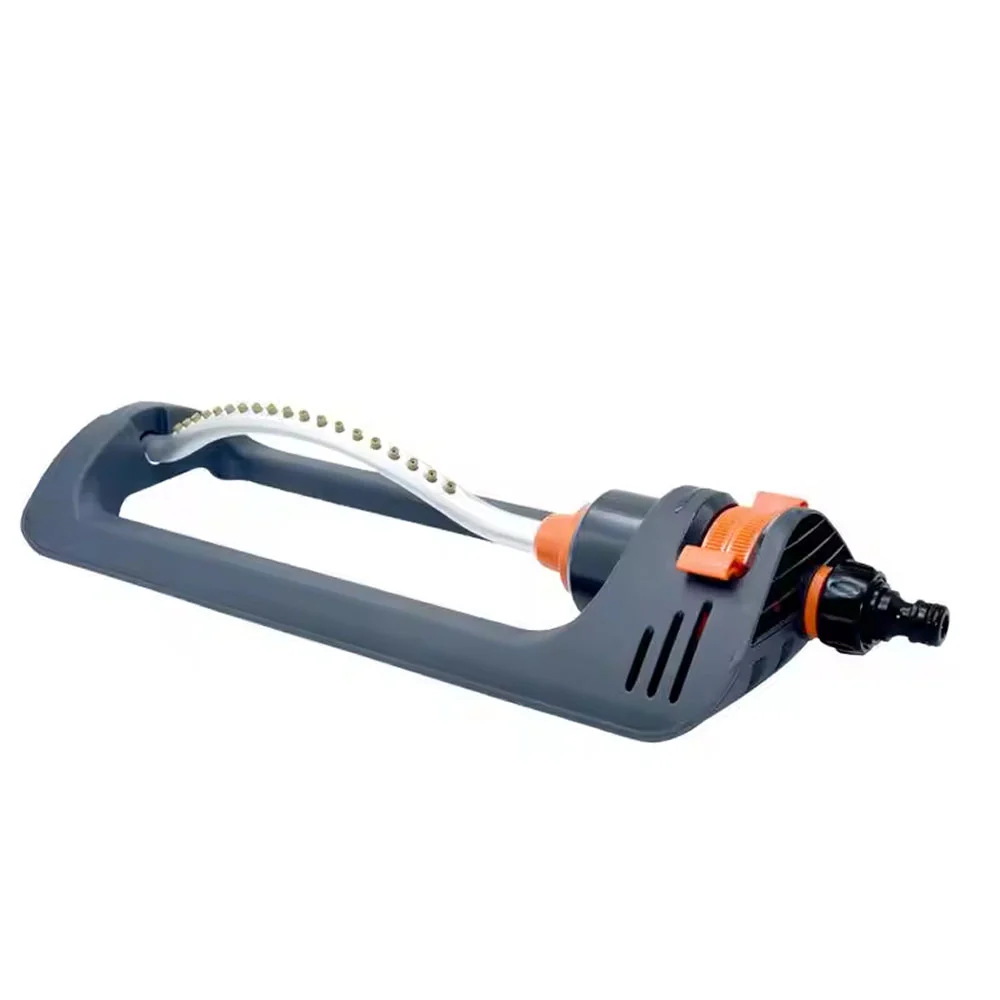
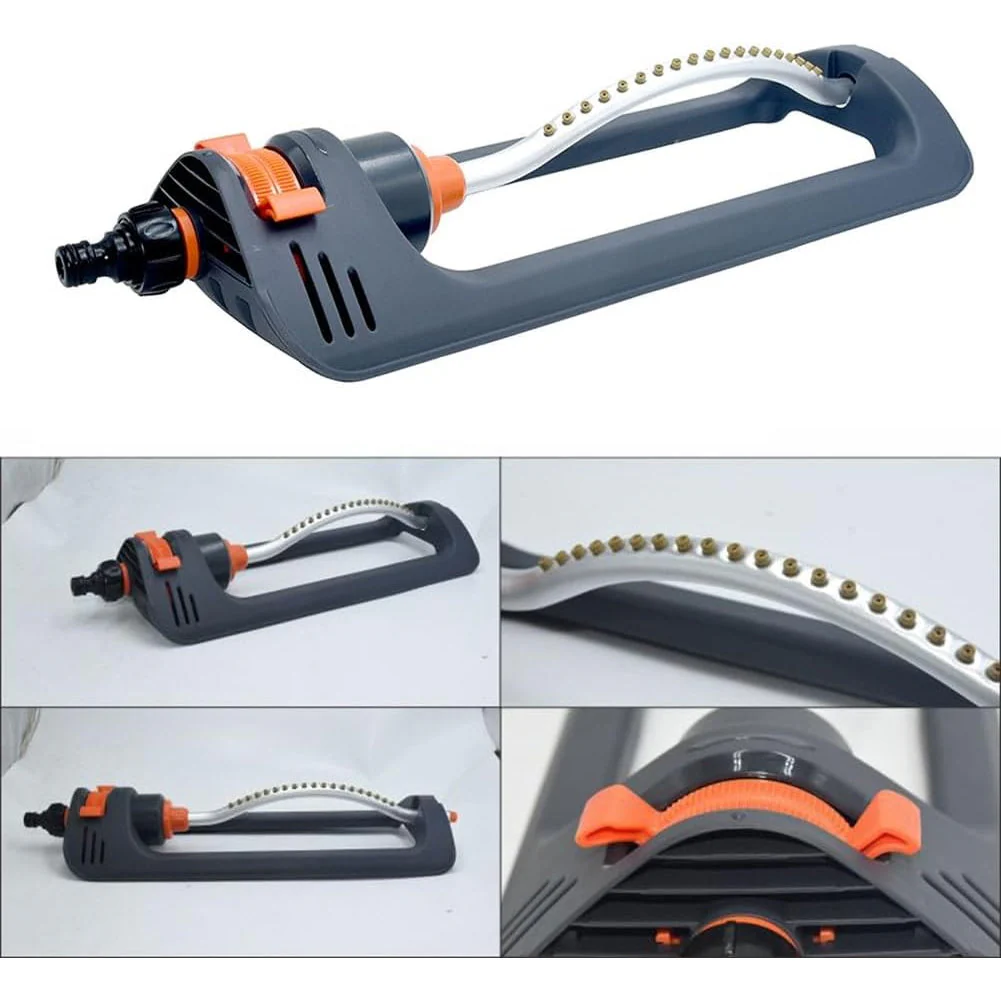
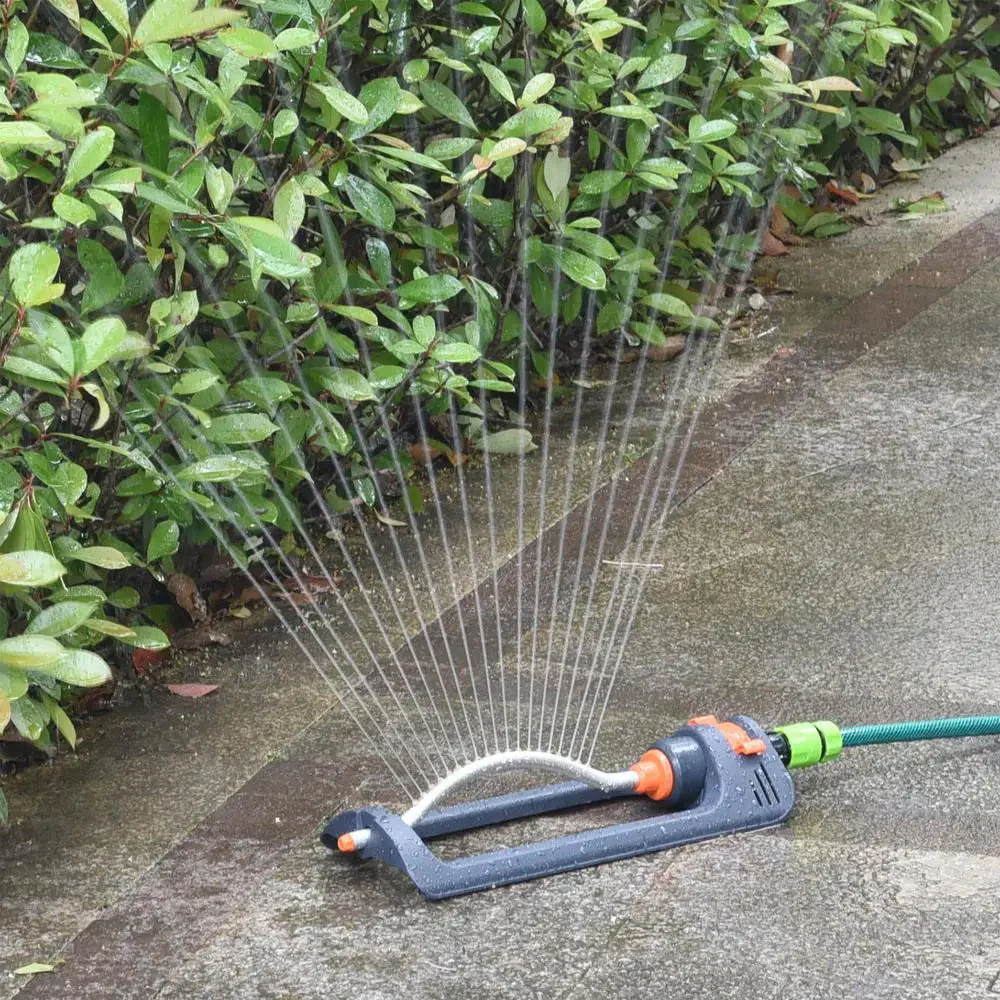
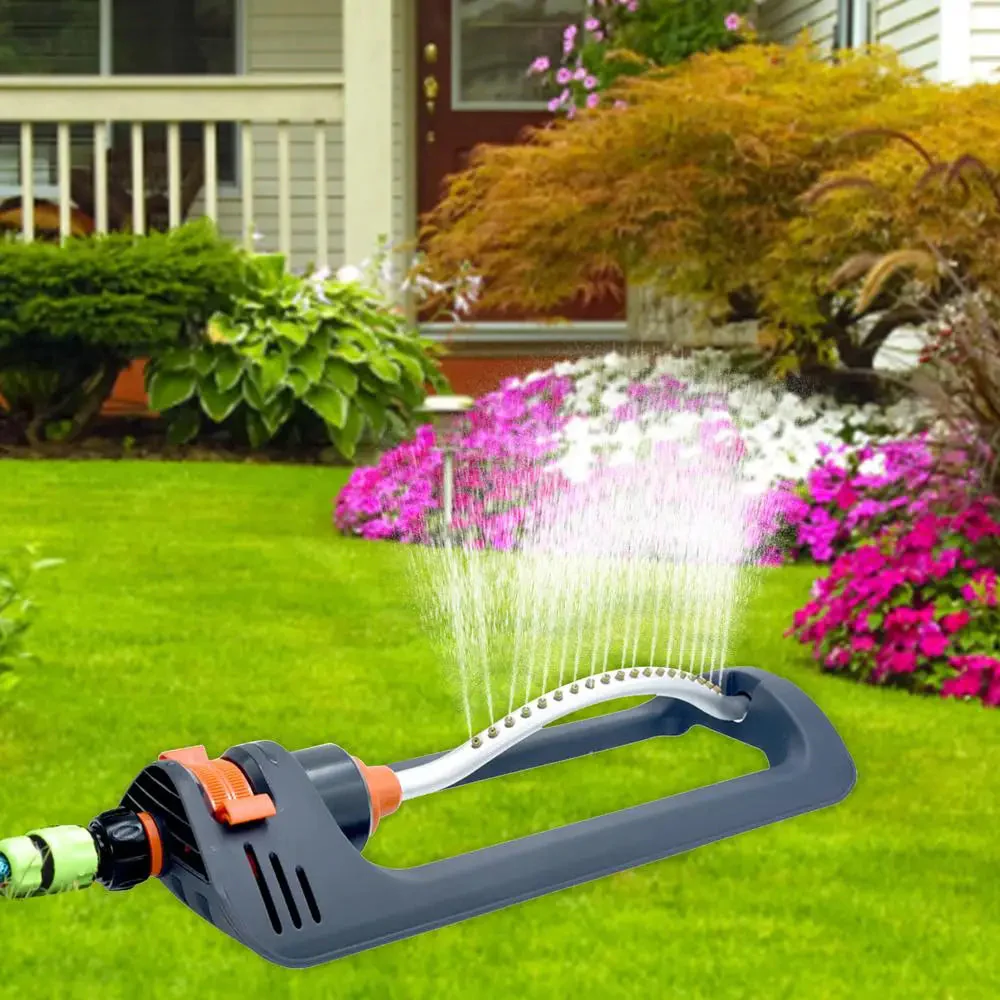
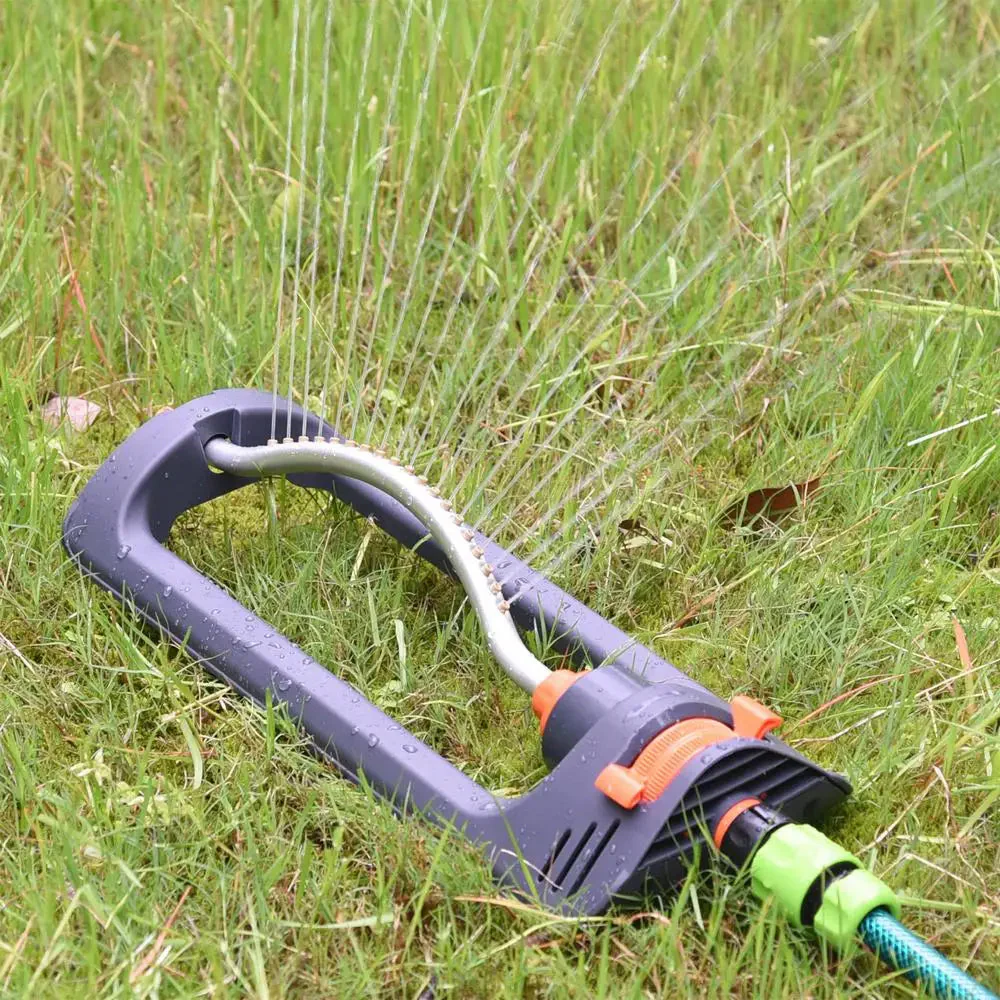
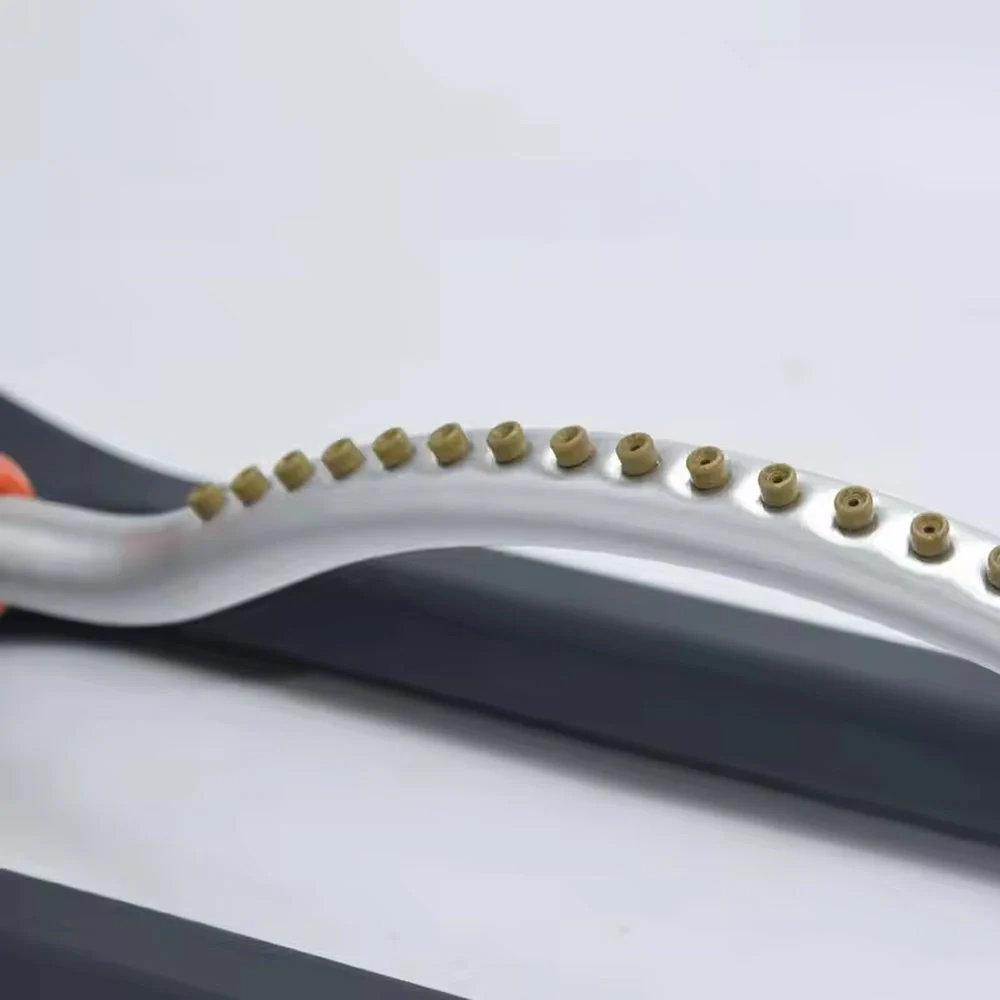
SplaxRay Oscillating Sprinkler features upgraded automatic oscillation design watering in all directions achieving higher density irrigation compared to stationary sprinklers leaving gaps—19 holes spray nozzles distributed along aluminum alloy pipe deliver uniform water distribution ensuring every section receives adequate moisture eliminating dry spots—while high watering efficiency covers large areas quickly (typical coverage 3000-4500 sq ft depending on water pressure) ideal for expansive lawns, vegetable gardens, or flower beds requiring comprehensive irrigation, plus gentle shower spray pattern suitable for delicate plants avoiding soil erosion or plant damage from excessive pressure.
Wanting Customizable Spray Patterns With Easy Operation?
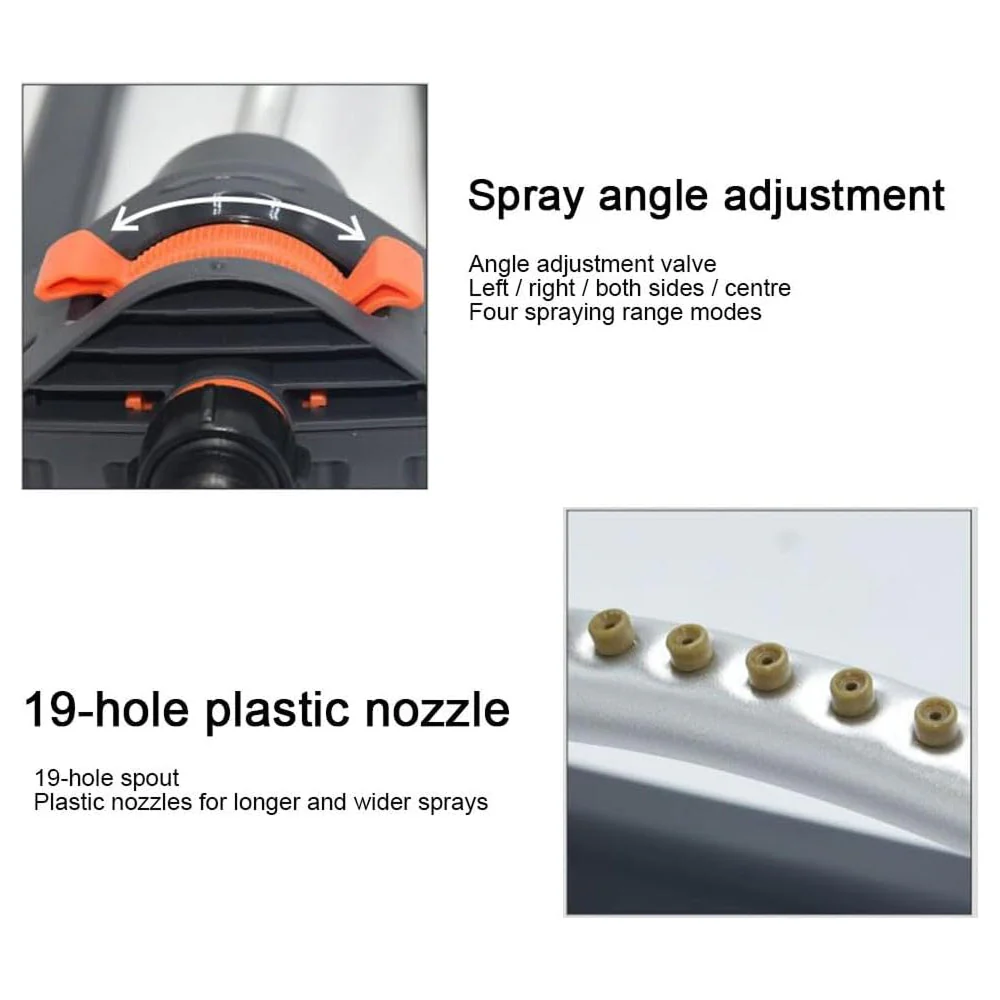
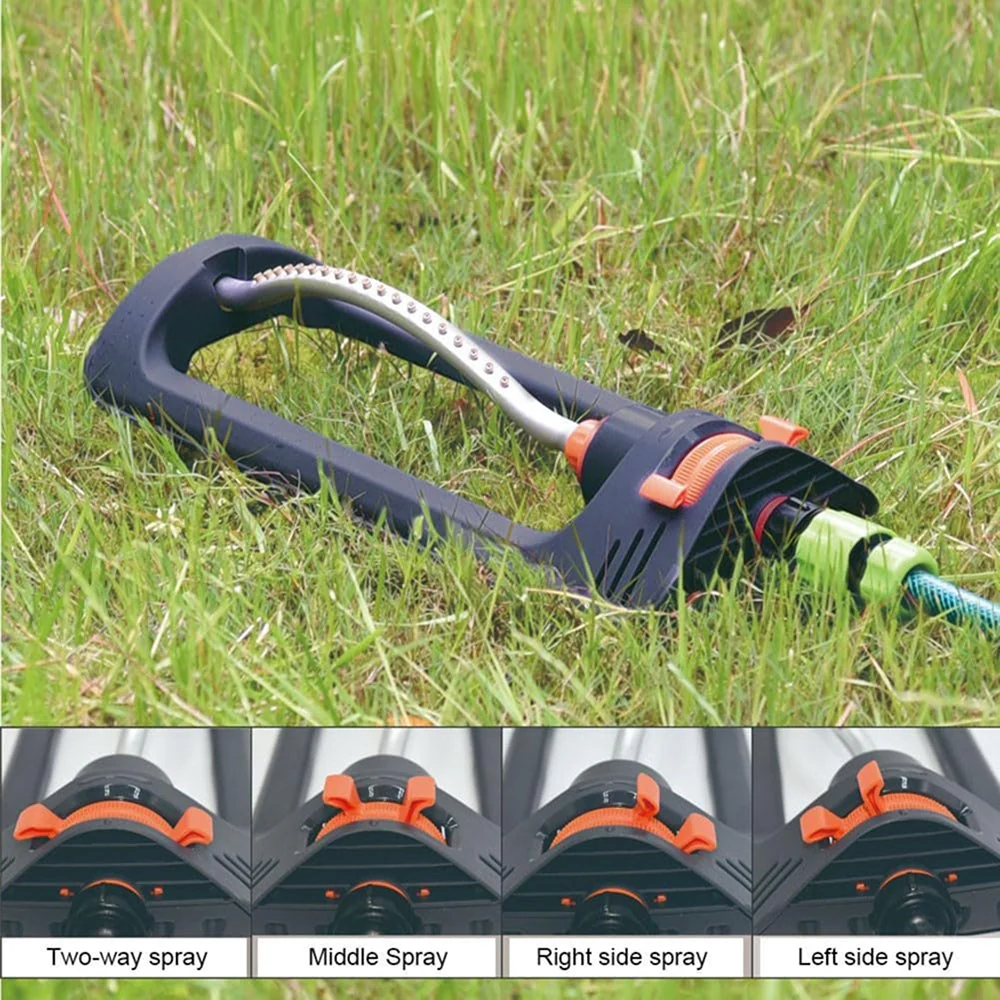
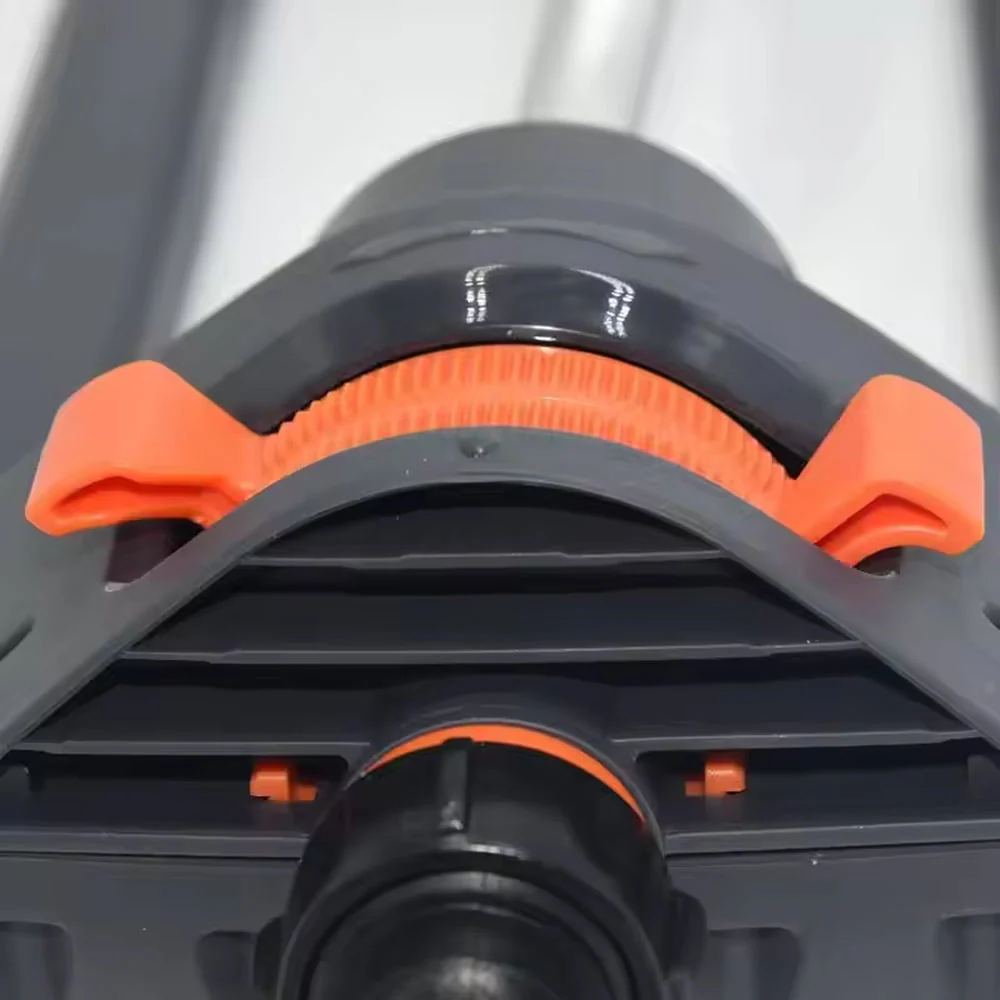
SplaxRay Oscillating Sprinkler equipped with four adjustable spray modes—both sides simultaneous watering for maximum coverage, left side only for targeted zone irrigation, right side only for asymmetric garden layouts, and middle spray for concentrated watering—freely choosing spraying method and range controlling distance and area matching specific garden configuration, while simple installation requires only placing sprinkler middle of lawn/yard, connecting standard garden hose to adapter, and turning on faucet without tools or complicated setup, and included stable base ensures running balance preventing tipping during oscillation maintaining consistent spray pattern.
Seeking Durable Construction With Multi-Function Versatility?
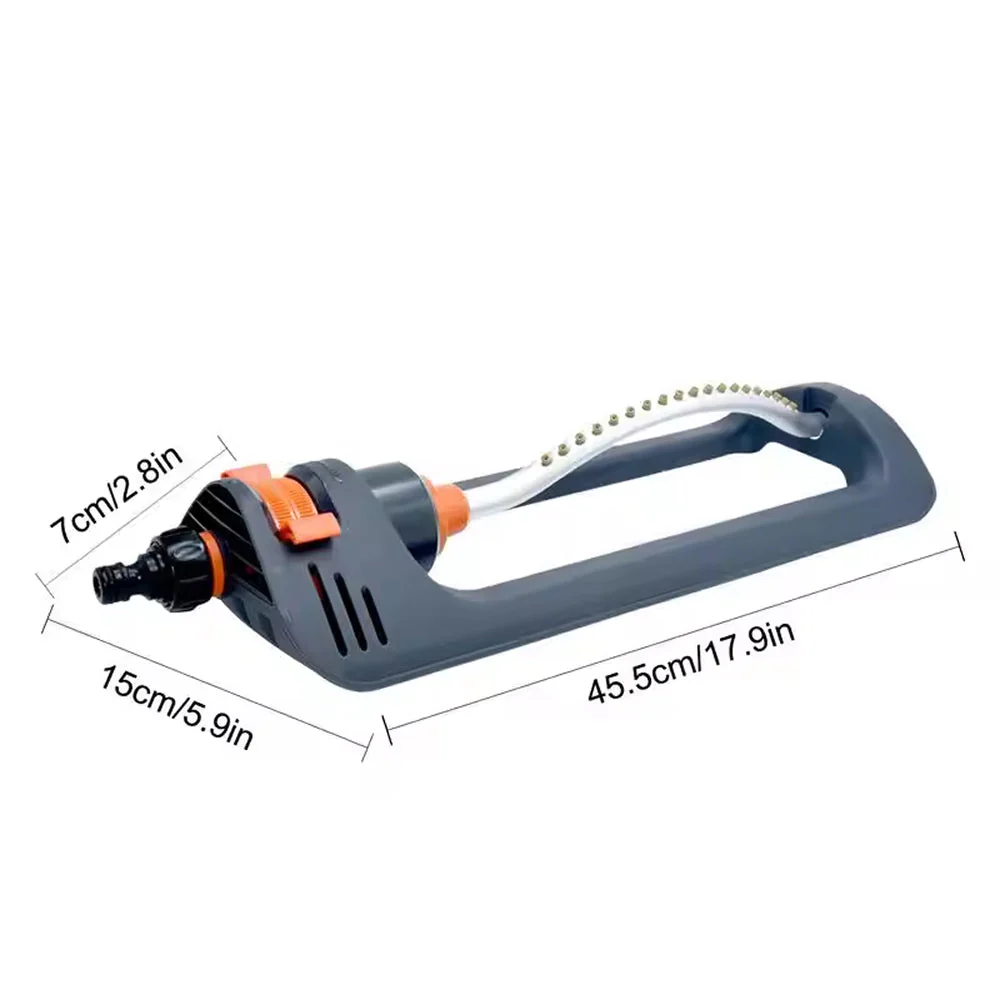
SplaxRay Oscillating Sprinkler constructed from high-quality materials—durable lightweight ABS plastic base (odorless, sturdy) with aluminum alloy spray water pipe ensuring long-term use without corrosion or degradation—while tightly sealed outlet connections prevent leakage maintaining water pressure efficiency, and wide application versatility serves multiple purposes: watering flowers/grasses/vegetables/plants for irrigation, cooling children and pets during summer heat creating fun outdoor water play, industrial cooling applications, and animal showers demonstrating functionality beyond basic lawn watering.
Transform Your Garden Maintenance With Professional Oscillating Technology
This sprinkler combines 19-hole automatic oscillation, high-density irrigation coverage, and four adjustable spray patterns (both sides/left/right/middle) with durable ABS plastic base, aluminum alloy spray pipe, tightly sealed leak-proof outlets, stable base preventing tipping, simple hose connection installation, large area coverage (3000-4500+ sq ft), gentle shower spray for delicate plants, multi-function versatility (irrigation/cooling/play), and long service life construction for comprehensive automated lawn and garden watering eliminating manual labor.
19-Hole Automatic Oscillation Design
Four Adjustable Spray Pattern Modes
Aluminum Alloy Corrosion-Resistant Pipe
Large Area Coverage 3000+ Sq Ft
UPGRADED AUTOMATIC OSCILLATION TECHNOLOGY
Enhanced oscillating mechanism sweeps automatically side-to-side covering wide rectangular areas (typically 30-50 feet width × 20-40 feet depth depending on water pressure) without manual repositioning—motor-driven or water-pressure-powered oscillation (specific mechanism varies by model) provides consistent back-and-forth motion ensuring every lawn section receives equal water exposure, while all-direction watering with synchronized oscillation and spray creates overlapping coverage patterns eliminating strips or gaps common with stationary sprinklers requiring multiple placements, and automatic operation allows unattended watering freeing time for other activities while maintaining garden without constant supervision.
HIGH-DENSITY 19-HOLE SPRAY PATTERN
Multiple nozzle configuration (19 holes distributed along spray bar) creates dense water curtain with closely-spaced spray streams—more holes = smaller gaps between streams = more uniform coverage without dry strips between water paths—delivering gentle rain-like shower rather than harsh concentrated jets that compact soil or damage delicate foliage, while adjustable nozzle angles (some models) customize spray trajectory from low arc (windy conditions minimizing drift) to high arc (maximum coverage reaching over obstacles), and even distribution prevents over-watering in some areas while under-watering others ensuring consistent soil moisture supporting uniform plant growth.
FOUR CUSTOMIZABLE SPRAY MODES
Both-sides mode: full oscillation watering entire rectangular coverage area maximizing efficiency for large open lawns. Left-side mode: waters only left half during oscillation—useful for L-shaped gardens, borders along fences/property lines, or avoiding watering already-saturated areas. Right-side mode: mirrors left functionality for opposite-side targeting. Middle-spray mode: concentrates water in center strip without oscillation—ideal for narrow beds, vegetable rows, or precision watering specific zones. Mode selection (typically via control lever or valve adjustment) enables strategic irrigation matching garden layout without moving sprinkler—single positioning handles multiple garden sections sequentially.
DURABLE ALUMINUM ALLOY CONSTRUCTION
Spray bar constructed from lightweight aluminum alloy (versus plastic alternatives degrading under UV exposure within 1-2 seasons) resists corrosion from constant water exposure, maintains structural integrity without warping or cracking through temperature extremes (-10°F to 120°F+), and withstands accidental impacts (lawnmower collisions, stepping on sprinkler, falling garden tools) without breaking—professional-grade material used in commercial irrigation justifying residential durability expectations, while ABS plastic base components provide impact resistance, lightweight portability (total weight typically 1-3 lbs), and stability through engineered sled-style or weighted base design preventing tipping during operation.
LEAK-PROOF SEALED CONNECTIONS
Tightly sealed outlet fittings with rubber gaskets or O-rings create watertight connections preventing pressure loss from leakage—critical because even minor leaks reduce effective spray distance and coverage area significantly (10% pressure loss = 15-20% coverage reduction), waste water through drips accumulating 5-10 gallons daily over irrigation season, and create muddy spots around sprinkler base, while quality seals maintain performance through repeated hose connections/disconnections without degrading, and standard garden hose threading (typically ¾-inch GHT - Garden Hose Thread) ensures universal compatibility with existing hoses and timers.
LARGE AREA EFFICIENT COVERAGE
Coverage capacity 3000-4500+ square feet (approximately 60×60 to 70×70 foot area) at standard residential water pressure (40-60 PSI) enables complete lawn irrigation from single sprinkler position for typical suburban lots (quarter-acre properties with 5000-8000 sq ft lawn area requiring 1-2 sprinkler placements), while high watering efficiency delivers adequate moisture depth (typically 0.5-1 inch per hour depending on pressure and nozzle settings) within practical runtime (20-40 minutes) matching soil absorption rates preventing runoff waste, and fewer sprinkler relocations save time versus smaller-coverage models requiring 4-6 different positions covering same area.
Meet The SPLAXRAY
Frequently Asked Questions
How does oscillating compare to rotating or stationary sprinklers?
Oscillating: rectangular coverage ideal for lawns, sweeping motion provides even distribution, gentle rain-like spray suitable for all plants. Best for: rectangular lawns, vegetable gardens, flower beds, areas near structures (adjustable patterns prevent watering buildings). Rotating (impact): circular coverage, powerful spray reaches farther (50+ feet), louder operation. Best for: large open areas, athletic fields, commercial landscapes. Stationary: fixed circular/square pattern, no moving parts (most reliable), limited coverage. Best for: small areas, spot watering, simple applications. Most residential lawns benefit from oscillating rectangular coverage matching typical lot shapes.
What water pressure is required for optimal performance?
Optimal: 40-60 PSI (standard residential water pressure) provides full coverage and proper oscillation. Minimum: 30 PSI—sprinkler operates but reduced throw distance (coverage approximately 60-70% of rated). Maximum: 80 PSI—may cause excessive misting (water evaporates before reaching ground), potential seal damage over time. Test home pressure: purchase pressure gauge at hardware store ($10-15) attaching to outdoor faucet. Low pressure solutions: remove flow restrictors from hose connections, minimize hose length, use ¾-inch hoses (not ½-inch). High pressure: install pressure regulator at faucet preventing damage.
Can I use this on slopes or only flat lawns?
Moderate slopes acceptable (up to 10-15 degrees)—oscillating mechanism functions regardless of base angle, though water distribution may become slightly uneven (downslope side receives more water due to gravity). Steep slopes (>20 degrees): base instability risk, severe water distribution imbalance. Solutions: position sprinkler upslope of area watering downward, create level platform using bricks/pavers, consider drip irrigation for extreme slopes. Cross-slope positioning (sprinkler perpendicular to slope direction) provides most even coverage. Test stability before leaving unattended—tipping mid-cycle wastes water and creates flooding.
How long should I water my lawn per session?
General guideline: lawns require 1-1.5 inches water weekly (including rainfall). Measure sprinkler output: place straight-sided containers (tuna cans, measuring cups) at various distances, run sprinkler 30 minutes, measure water depth, calculate runtime for 1 inch. Example: if 30 minutes delivers 0.5 inch, need 60 minutes per area for 1 inch. Adjust for: soil type (clay retains moisture—water less frequently but deeply, sandy soil drains fast—water more frequently shorter duration), season (summer heat increases needs 50%, cool spring reduces 30%), grass type (fescue needs more than bermuda). Split into 2-3 sessions weekly rather than daily light watering encouraging deep roots.
Does aluminum alloy pipe really matter versus plastic?
Significantly for longevity. Aluminum alloy advantages: UV resistance (no degradation from sun exposure causing brittleness), corrosion resistance from constant water exposure, maintains spray hole integrity (plastic deforms over time enlarging holes causing uneven spray), temperature stability (plastic expands/contracts causing leaks at connection points), impact resistance (aluminum dents rather than shatters). Plastic pipe lifespan: 1-3 seasons of regular use. Aluminum lifespan: 5-10+ years. Initial cost difference: $10-20 premium for aluminum. Long-term value: aluminum saves $30-60 in replacements over 5 years.
Can children and pets play in sprinkler water safely?
Generally yes with considerations: Water safety: municipally treated water safe for contact, well water test for contaminants if concerned. Slipping hazards: wet grass slippery—supervise young children, avoid running on hard surfaces (patios, driveways). Eye protection: avoid direct spray to face—gentle shower spray less concerning than high-pressure jets. Sun exposure: sprinkler play doesn't replace sunscreen—UV radiation unaffected by water cooling. Pet considerations: ensure pets can retreat to dry areas if uncomfortable, monitor water consumption (some pets drink excessively from sprinklers causing stomach upset). Supervise play, provide shaded rest areas, limit sessions to 30-60 minutes preventing overexposure.
What maintenance is required to prevent clogging or damage?
Seasonal startup: flush hose before connecting (remove debris accumulated during winter storage), check all connections for leaks tightening if needed, inspect spray holes for blockages (use pin clearing if necessary). During season: periodically inspect spray pattern uniformity (clogged holes create gaps), remove mineral deposits with vinegar soak if hard water causes buildup, check oscillation mechanism operates smoothly without sticking. Seasonal shutdown: disconnect from hose, drain completely inverting sprinkler shaking out residual water (prevents freeze damage in cold climates), store indoors (garage, shed, basement) protecting from winter weather, coil hose separately preventing kinks. Annual deep clean: disassemble (if possible), soak components in vinegar solution removing mineral deposits, lubricate moving parts with silicone spray.
Does this work with automatic timer systems for scheduled watering?
Yes, fully compatible with standard hose-end timers (mechanical or electronic). Setup: connect timer to outdoor faucet, connect hose to timer output, connect sprinkler to hose. Timer controls water flow on/off schedule. Considerations: ensure timer water pressure rating matches/exceeds home pressure, battery-powered timers require annual battery replacement, mechanical timers more reliable but less programming flexibility, smart timers integrate with weather data skipping watering during rain. Programming recommendations: early morning watering (4-8am) minimizes evaporation, split irrigation into 2-3 weekly deep sessions rather than daily light watering, adjust seasonally matching plant needs and rainfall. Timer investment: $20-80 depending on features, repays through water conservation and convenience.
Description
Experience Ultimate Automatic Watering Freedom With SplaxRay Oscillating Sprinkler
Looking For High-Density Coverage With Automatic Oscillation?
SplaxRay Oscillating Sprinkler features upgraded automatic oscillation design watering in all directions achieving higher density irrigation compared to stationary sprinklers leaving gaps—19 holes spray nozzles distributed along aluminum alloy pipe deliver uniform water distribution ensuring every section receives adequate moisture eliminating dry spots—while high watering efficiency covers large areas quickly (typical coverage 3000-4500 sq ft depending on water pressure) ideal for expansive lawns, vegetable gardens, or flower beds requiring comprehensive irrigation, plus gentle shower spray pattern suitable for delicate plants avoiding soil erosion or plant damage from excessive pressure.
Wanting Customizable Spray Patterns With Easy Operation?
SplaxRay Oscillating Sprinkler equipped with four adjustable spray modes—both sides simultaneous watering for maximum coverage, left side only for targeted zone irrigation, right side only for asymmetric garden layouts, and middle spray for concentrated watering—freely choosing spraying method and range controlling distance and area matching specific garden configuration, while simple installation requires only placing sprinkler middle of lawn/yard, connecting standard garden hose to adapter, and turning on faucet without tools or complicated setup, and included stable base ensures running balance preventing tipping during oscillation maintaining consistent spray pattern.
Seeking Durable Construction With Multi-Function Versatility?
SplaxRay Oscillating Sprinkler constructed from high-quality materials—durable lightweight ABS plastic base (odorless, sturdy) with aluminum alloy spray water pipe ensuring long-term use without corrosion or degradation—while tightly sealed outlet connections prevent leakage maintaining water pressure efficiency, and wide application versatility serves multiple purposes: watering flowers/grasses/vegetables/plants for irrigation, cooling children and pets during summer heat creating fun outdoor water play, industrial cooling applications, and animal showers demonstrating functionality beyond basic lawn watering.
Transform Your Garden Maintenance With Professional Oscillating Technology
This sprinkler combines 19-hole automatic oscillation, high-density irrigation coverage, and four adjustable spray patterns (both sides/left/right/middle) with durable ABS plastic base, aluminum alloy spray pipe, tightly sealed leak-proof outlets, stable base preventing tipping, simple hose connection installation, large area coverage (3000-4500+ sq ft), gentle shower spray for delicate plants, multi-function versatility (irrigation/cooling/play), and long service life construction for comprehensive automated lawn and garden watering eliminating manual labor.
19-Hole Automatic Oscillation Design
Four Adjustable Spray Pattern Modes
Aluminum Alloy Corrosion-Resistant Pipe
Large Area Coverage 3000+ Sq Ft
UPGRADED AUTOMATIC OSCILLATION TECHNOLOGY
Enhanced oscillating mechanism sweeps automatically side-to-side covering wide rectangular areas (typically 30-50 feet width × 20-40 feet depth depending on water pressure) without manual repositioning—motor-driven or water-pressure-powered oscillation (specific mechanism varies by model) provides consistent back-and-forth motion ensuring every lawn section receives equal water exposure, while all-direction watering with synchronized oscillation and spray creates overlapping coverage patterns eliminating strips or gaps common with stationary sprinklers requiring multiple placements, and automatic operation allows unattended watering freeing time for other activities while maintaining garden without constant supervision.
HIGH-DENSITY 19-HOLE SPRAY PATTERN
Multiple nozzle configuration (19 holes distributed along spray bar) creates dense water curtain with closely-spaced spray streams—more holes = smaller gaps between streams = more uniform coverage without dry strips between water paths—delivering gentle rain-like shower rather than harsh concentrated jets that compact soil or damage delicate foliage, while adjustable nozzle angles (some models) customize spray trajectory from low arc (windy conditions minimizing drift) to high arc (maximum coverage reaching over obstacles), and even distribution prevents over-watering in some areas while under-watering others ensuring consistent soil moisture supporting uniform plant growth.
FOUR CUSTOMIZABLE SPRAY MODES
Both-sides mode: full oscillation watering entire rectangular coverage area maximizing efficiency for large open lawns. Left-side mode: waters only left half during oscillation—useful for L-shaped gardens, borders along fences/property lines, or avoiding watering already-saturated areas. Right-side mode: mirrors left functionality for opposite-side targeting. Middle-spray mode: concentrates water in center strip without oscillation—ideal for narrow beds, vegetable rows, or precision watering specific zones. Mode selection (typically via control lever or valve adjustment) enables strategic irrigation matching garden layout without moving sprinkler—single positioning handles multiple garden sections sequentially.
DURABLE ALUMINUM ALLOY CONSTRUCTION
Spray bar constructed from lightweight aluminum alloy (versus plastic alternatives degrading under UV exposure within 1-2 seasons) resists corrosion from constant water exposure, maintains structural integrity without warping or cracking through temperature extremes (-10°F to 120°F+), and withstands accidental impacts (lawnmower collisions, stepping on sprinkler, falling garden tools) without breaking—professional-grade material used in commercial irrigation justifying residential durability expectations, while ABS plastic base components provide impact resistance, lightweight portability (total weight typically 1-3 lbs), and stability through engineered sled-style or weighted base design preventing tipping during operation.
LEAK-PROOF SEALED CONNECTIONS
Tightly sealed outlet fittings with rubber gaskets or O-rings create watertight connections preventing pressure loss from leakage—critical because even minor leaks reduce effective spray distance and coverage area significantly (10% pressure loss = 15-20% coverage reduction), waste water through drips accumulating 5-10 gallons daily over irrigation season, and create muddy spots around sprinkler base, while quality seals maintain performance through repeated hose connections/disconnections without degrading, and standard garden hose threading (typically ¾-inch GHT - Garden Hose Thread) ensures universal compatibility with existing hoses and timers.
LARGE AREA EFFICIENT COVERAGE
Coverage capacity 3000-4500+ square feet (approximately 60×60 to 70×70 foot area) at standard residential water pressure (40-60 PSI) enables complete lawn irrigation from single sprinkler position for typical suburban lots (quarter-acre properties with 5000-8000 sq ft lawn area requiring 1-2 sprinkler placements), while high watering efficiency delivers adequate moisture depth (typically 0.5-1 inch per hour depending on pressure and nozzle settings) within practical runtime (20-40 minutes) matching soil absorption rates preventing runoff waste, and fewer sprinkler relocations save time versus smaller-coverage models requiring 4-6 different positions covering same area.
Meet The SPLAXRAY
Frequently Asked Questions
How does oscillating compare to rotating or stationary sprinklers?
Oscillating: rectangular coverage ideal for lawns, sweeping motion provides even distribution, gentle rain-like spray suitable for all plants. Best for: rectangular lawns, vegetable gardens, flower beds, areas near structures (adjustable patterns prevent watering buildings). Rotating (impact): circular coverage, powerful spray reaches farther (50+ feet), louder operation. Best for: large open areas, athletic fields, commercial landscapes. Stationary: fixed circular/square pattern, no moving parts (most reliable), limited coverage. Best for: small areas, spot watering, simple applications. Most residential lawns benefit from oscillating rectangular coverage matching typical lot shapes.
What water pressure is required for optimal performance?
Optimal: 40-60 PSI (standard residential water pressure) provides full coverage and proper oscillation. Minimum: 30 PSI—sprinkler operates but reduced throw distance (coverage approximately 60-70% of rated). Maximum: 80 PSI—may cause excessive misting (water evaporates before reaching ground), potential seal damage over time. Test home pressure: purchase pressure gauge at hardware store ($10-15) attaching to outdoor faucet. Low pressure solutions: remove flow restrictors from hose connections, minimize hose length, use ¾-inch hoses (not ½-inch). High pressure: install pressure regulator at faucet preventing damage.
Can I use this on slopes or only flat lawns?
Moderate slopes acceptable (up to 10-15 degrees)—oscillating mechanism functions regardless of base angle, though water distribution may become slightly uneven (downslope side receives more water due to gravity). Steep slopes (>20 degrees): base instability risk, severe water distribution imbalance. Solutions: position sprinkler upslope of area watering downward, create level platform using bricks/pavers, consider drip irrigation for extreme slopes. Cross-slope positioning (sprinkler perpendicular to slope direction) provides most even coverage. Test stability before leaving unattended—tipping mid-cycle wastes water and creates flooding.
How long should I water my lawn per session?
General guideline: lawns require 1-1.5 inches water weekly (including rainfall). Measure sprinkler output: place straight-sided containers (tuna cans, measuring cups) at various distances, run sprinkler 30 minutes, measure water depth, calculate runtime for 1 inch. Example: if 30 minutes delivers 0.5 inch, need 60 minutes per area for 1 inch. Adjust for: soil type (clay retains moisture—water less frequently but deeply, sandy soil drains fast—water more frequently shorter duration), season (summer heat increases needs 50%, cool spring reduces 30%), grass type (fescue needs more than bermuda). Split into 2-3 sessions weekly rather than daily light watering encouraging deep roots.
Does aluminum alloy pipe really matter versus plastic?
Significantly for longevity. Aluminum alloy advantages: UV resistance (no degradation from sun exposure causing brittleness), corrosion resistance from constant water exposure, maintains spray hole integrity (plastic deforms over time enlarging holes causing uneven spray), temperature stability (plastic expands/contracts causing leaks at connection points), impact resistance (aluminum dents rather than shatters). Plastic pipe lifespan: 1-3 seasons of regular use. Aluminum lifespan: 5-10+ years. Initial cost difference: $10-20 premium for aluminum. Long-term value: aluminum saves $30-60 in replacements over 5 years.
Can children and pets play in sprinkler water safely?
Generally yes with considerations: Water safety: municipally treated water safe for contact, well water test for contaminants if concerned. Slipping hazards: wet grass slippery—supervise young children, avoid running on hard surfaces (patios, driveways). Eye protection: avoid direct spray to face—gentle shower spray less concerning than high-pressure jets. Sun exposure: sprinkler play doesn't replace sunscreen—UV radiation unaffected by water cooling. Pet considerations: ensure pets can retreat to dry areas if uncomfortable, monitor water consumption (some pets drink excessively from sprinklers causing stomach upset). Supervise play, provide shaded rest areas, limit sessions to 30-60 minutes preventing overexposure.
What maintenance is required to prevent clogging or damage?
Seasonal startup: flush hose before connecting (remove debris accumulated during winter storage), check all connections for leaks tightening if needed, inspect spray holes for blockages (use pin clearing if necessary). During season: periodically inspect spray pattern uniformity (clogged holes create gaps), remove mineral deposits with vinegar soak if hard water causes buildup, check oscillation mechanism operates smoothly without sticking. Seasonal shutdown: disconnect from hose, drain completely inverting sprinkler shaking out residual water (prevents freeze damage in cold climates), store indoors (garage, shed, basement) protecting from winter weather, coil hose separately preventing kinks. Annual deep clean: disassemble (if possible), soak components in vinegar solution removing mineral deposits, lubricate moving parts with silicone spray.
Does this work with automatic timer systems for scheduled watering?
Yes, fully compatible with standard hose-end timers (mechanical or electronic). Setup: connect timer to outdoor faucet, connect hose to timer output, connect sprinkler to hose. Timer controls water flow on/off schedule. Considerations: ensure timer water pressure rating matches/exceeds home pressure, battery-powered timers require annual battery replacement, mechanical timers more reliable but less programming flexibility, smart timers integrate with weather data skipping watering during rain. Programming recommendations: early morning watering (4-8am) minimizes evaporation, split irrigation into 2-3 weekly deep sessions rather than daily light watering, adjust seasonally matching plant needs and rainfall. Timer investment: $20-80 depending on features, repays through water conservation and convenience.